

 français
 русский
 español
 العربية
Search
What Are You Looking For?
Search

The telecommunications industry is witnessing a fundamental realignment of infrastructure roles. For decades, the architecture of connectivity was vertically integrated: a single tower, a single operator, a single purpose. Today, a new division of labor is emerging—one that leverages the unique strengths of both space-based and terrestrial assets. In this paradigm, satellite constellations like Starlink dominate wide-area coverage and backhaul, while ground-based towers handle low-latency AI inference and indoor penetration. This is not a competition for supremacy but a strategic specialization driven by immutable physics and economics.
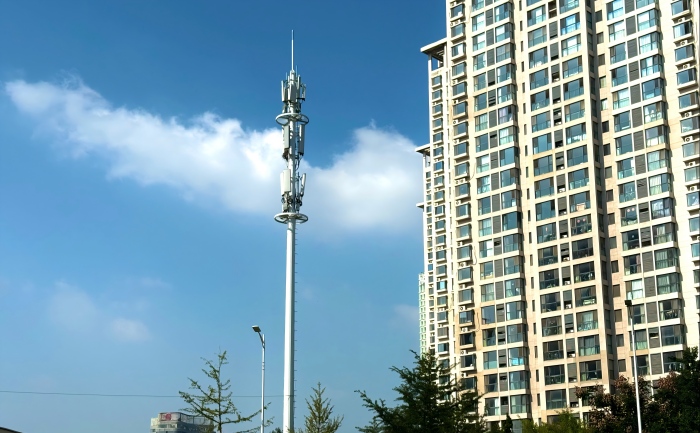
The most fundamental constraint on satellite communication is spectrum. AT&T CEO John Stankey recently delivered a "physics lesson" to the industry, highlighting a stark numerical reality: terrestrial mobile network operators have access to approximately 300 megahertz of spectrum per cell site, which is more than triple the 80 megahertz that SpaceX can provide from its entire satellite constellation.
This 80 MHz allocation must be shared across a spot beam covering a radius of roughly 20 miles—compared to a terrestrial cell site's 2-2.5 mile radius . The implication is inescapable: spectral density—bandwidth per user per square kilometer—is fundamentally limited in satellite systems. As Stankey noted, this creates "a weaker uplink" and makes a like-for-like replacement of terrestrial networks by satellites "a hard putt" .
An Analysys Mason report quantified this limitation, finding that Starlink's constellation could provide maximum downlink capacity per beam of only 18.3 Mb/s using 5 MHz of spectrum "under optimal conditions"—capacity that must be shared among all users under that beam.

Satellite signals face another immutable constraint: building penetration. Research has consistently demonstrated that higher frequencies—precisely those used by modern satellite systems for bandwidth—suffer disproportionately from wall attenuation.
Academic studies of satellite-to-indoor propagation at L-, S-, and C-bands have documented significant building penetration losses that increase with frequency . A comprehensive measurement campaign using a remote-controlled airship as a pseudo-satellite found a pronounced elevation-angle dependence in signal loss, with non-line-of-sight conditions within buildings presenting formidable challenges .
For low-Earth orbit (LEO) satellite signals, penetration into deep indoor environments remains problematic. However, research has shown that lower-frequency constellations like Orbcomm (operating in the VHF band at 137-138 MHz) can achieve remarkable indoor penetration—even reaching basements—while higher-frequency systems struggle . This underscores the fundamental trade-off: lower frequencies penetrate buildings but offer limited bandwidth; higher frequencies deliver capacity but stop at the window.
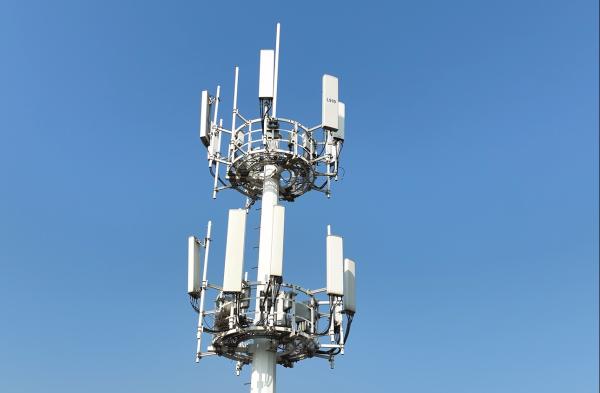
Modern building materials compound the problem. Low-emissivity (low-E) coated glass, ubiquitous in energy-efficient construction, can attenuate satellite signals by 4.2 dB or more at Ku-band frequencies . Double-silver coated glass can increase attenuation to 3.5 dB, and when signals must pass through at oblique angles—typical for satellites at lower elevation angles—polarization loss can spike by 40% .
AST SpaceMobile, a direct-to-cell satellite provider, acknowledges that achieving reliable indoor reception requires significant signal strength. While 35 dBi may suffice for outdoor and vehicle connectivity, reliable light indoor penetration demands 40 dBi—a threefold increase in signal power—and next-generation satellites aim for 46 dBi to compensate for building loss .
The emerging era of edge AI and real-time applications introduces another constraint: latency. While LEO satellites have dramatically reduced round-trip times compared to geostationary orbit—Starlink achieves latencies of 31 milliseconds in ideal conditions —this still exceeds the single-digit millisecond requirements of autonomous systems, industrial robotics, and augmented reality.
Stankey emphasized this point, noting that satellite upstream links are "inherently going to be a more fragile upstream uplink" than terrestrial networks that connect to fiber quickly . For AI inference—where split-second decisions matter—getting data onto fiber as rapidly as possible is paramount. Terrestrial towers with fiber backhaul provide the low-latency, high-reliability path that distributed intelligence demands.

These physical constraints naturally suggest a functional specialization:
LEO constellations excel at what terrestrial infrastructure cannot economically achieve: connecting the unconnected. For maritime vessels, aircraft, remote wilderness areas, and disaster zones, satellites are the only viable solution. They also serve as high-capacity backhaul for terrestrial sites in challenging locations .
ABI Research projects that the direct-to-cellular market will generate $11.6 billion in revenue by 2030, with IoT applications alone contributing $4 billion . As Stankey noted, satellite may prove superior for "assets that move all over the globe, like container ships"—applications where global mobility trumps local capacity .
Ground-based infrastructure—the monopoles, lattice towers, and small cells that form the subject of this blog series—will remain the workhorses of high-density connectivity. With 300+ MHz of spectrum per site, fiber backhaul, and proximity to users, terrestrial towers deliver:
Massive capacity for dense urban environments
Reliable indoor coverage through low-frequency bands and distributed antenna systems
Ultra-low latency for edge computing and AI inference
Support for massive MIMO and beamforming technologies that maximize spectral efficiency
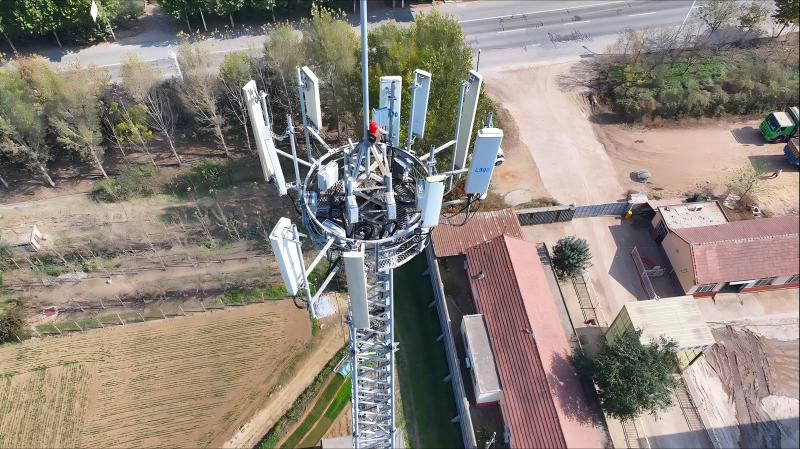
The true promise lies not in choosing one architecture over another but in seamless integration. Starlink already operates over 8,000 satellites in orbit, with more than 600 supporting direct-to-device services . Terrestrial operators are partnering with satellite providers—AT&T with AST SpaceMobile, others with Starlink—to create networks where devices intelligently select the optimal path based on location, activity, and requirements.
This hybrid model recognizes that:
Outdoors and mobile may favor satellite connectivity
Indoors and stationary demands terrestrial infrastructure
Emergency scenarios require both, with automatic failover
IoT applications may use satellite for remote reporting and terrestrial for dense sensor networks
The new division of labor in telecommunications infrastructure is not a battle for supremacy but a recognition of complementary strengths. Satellites, with their global reach and declining launch costs, will dominate the wide-area transport layer—connecting the remote, the mobile, and the underserved. Terrestrial towers, with their spectral abundance, building penetration, and fiber proximity, will anchor the capacity layer—delivering the bandwidth and low latency that AI, streaming, and real-time applications demand.
As one industry analyst noted, the market is "evolving quickly, and many services are finding enhanced deployment through strategic alliances" . The winners in this new landscape will be those who embrace specialization, integrate seamlessly across domains, and respect the physical constraints that ultimately govern all communication.
The sky is not the limit—it is one part of a unified system that extends from low-Earth orbit to the smallest indoor femtocell, each element performing the role for which physics and economics have best suited it.
Learn more at www.alttower.com



 IPv6 network supported