
 français
 русский
 español
 العربية
Search
What Are You Looking For?
Search
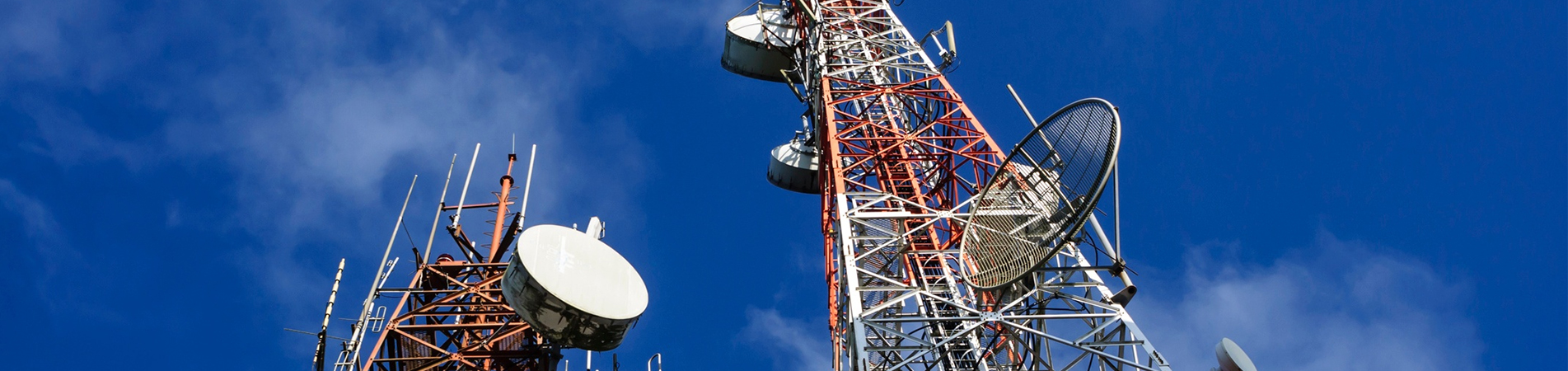
The expansion of 5G and IoT networks into the world's most challenging environments has placed unprecedented demands on telecommunications infrastructure. Nowhere is this more evident than in desert regions—from the Arabian Peninsula to the Gobi and the Sahara. While these regions represent vast opportunities for connectivity, they also subject monopole towers to a relentless triple assault: sand abrasion that strips protective coatings, extreme heat that compromises steel strength, and dust accumulation that threatens sensitive electronics.
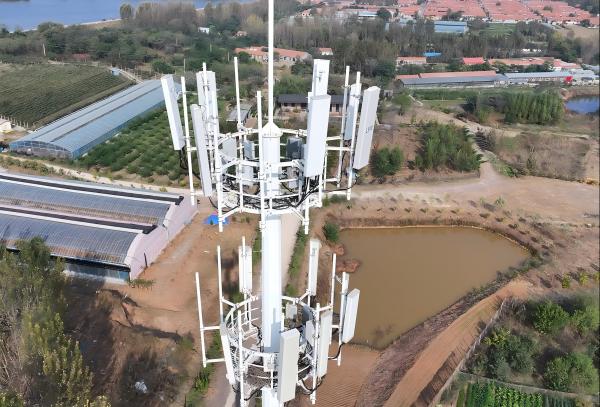
Standard monopole designs, engineered for temperate climates, degrade rapidly under these conditions. Desert-ready monopoles, however, are purpose-engineered with advanced material systems, thermal management strategies, and ingress protection technologies that ensure decades of reliable service where ordinary towers fail in years.
Desert environments combine three aggressive factors that accelerate structural and equipment degradation in ways no single environmental condition can replicate.
Deserts are defined by windborne sand. Fine silica particles, carried at velocities up to 250 km/h, act as abrasive projectiles against every exposed surface. While hot-dip galvanizing (HDG) provides excellent corrosion protection, wind and sand containing large numbers of hard sand particles can abrade and scratch the galvanized coating surface, physically damaging the integrity of the zinc coating, exposing the steel substrate, and creating pitting corrosion [0†L31-L35].
The damage is cumulative. Sandstorms exert an abrasive effect that wears away protective coatings and exposes vulnerable surfaces [6†L28-L29]. The failure mechanism is mechanical: coating materials deform under the actions of sand cutting and compression, initiating microscopic cracks that propagate over time [0†L27-L29].
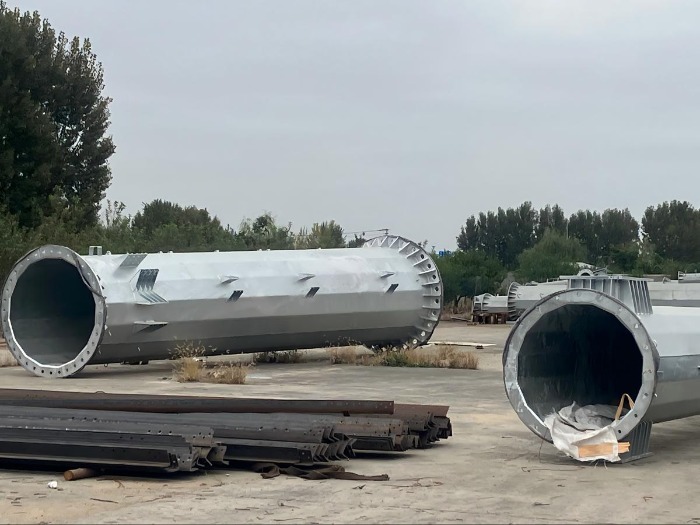
Temperatures in desert regions routinely exceed 50°C (122°F), with surface temperatures on steel structures reaching significantly higher under direct solar radiation (ambient temperatures as high as 55°C during periods of peak solar loading are common for outdoor devices) [11†L10-L12]. This thermal environment directly impacts the mechanical properties of structural steel.
At around 600°C (about 1,100°F), structural steel loses approximately 50% of its strength [7†L21-L22]. More relevant to desert conditions, elevated temperatures cause a reduction in yield strength, stiffness, and overall load-carrying capacity, which can compromise the structural integrity of steel frameworks [2†L20-L22]. Even before reaching extreme fire temperatures, prolonged exposure to high ambient heat accelerates creep deformation and reduces the effective safety margins built into standard designs.
Beyond abrasion and heat, fine desert dust creates a third problem: accumulation. Dust settles on equipment enclosures, antenna surfaces, and within structural crevices, acting as an insulating layer that traps heat. Dust accumulation also presents a challenge, as it not only increases abrasion but also prevents proper ventilation of surfaces, retaining heat and moisture [6†L36-L38].
In flange joints, crevices, and bolted connections, dust infiltration accelerates corrosion by retaining moisture against the steel surface. Extreme thermal oscillations also play an important role, as expansion and contraction cycles can generate cracks in materials, favoring the infiltration of corrosive agents [6†L30-L32].
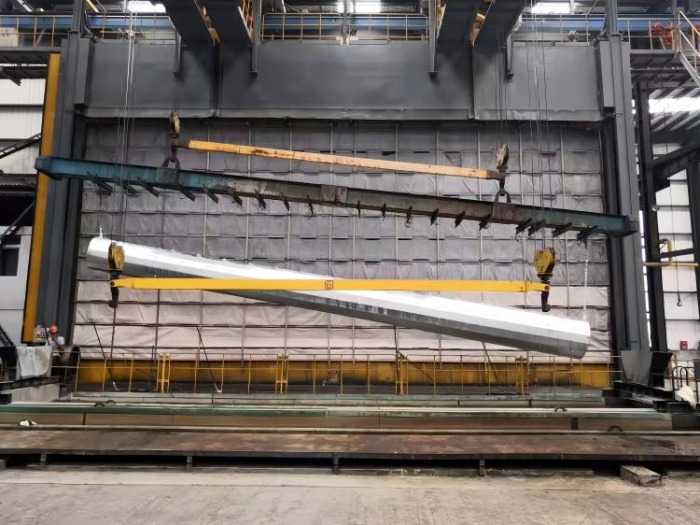
Standard HDG is insufficient for aggressive sand environments. Desert-ready monopoles specify heavy-duty HDG with enhanced thickness—typically ≥100 µm zinc layer thickness, compared to the 85 µm minimum required by standards like ASTM A123 [10†L42-L44]. This thicker zinc reservoir provides sacrificial protection for decades even under continuous sand impact.
For the most severe abrasion conditions, ceramic coatings offer superior protection. Research demonstrates that epoxy-resin ceramic composite coatings (with Al₂O₃ content as high as 65%) can significantly enhance erosion resistance in high-sand-content conditions [1†L5-L7]. All-ceramic coatings, such as CeraStrata, provide a chemically bonded, VOC-free barrier that resists abrasion, water, fire, and temperatures up to 400°F (204°C) [9†L9-L11]. These coatings eliminate osmotic blistering—a phenomenon where corrosion develops under conventional polymer coatings, destroying the metal surface so that the paint peels away [9†L17-L22].
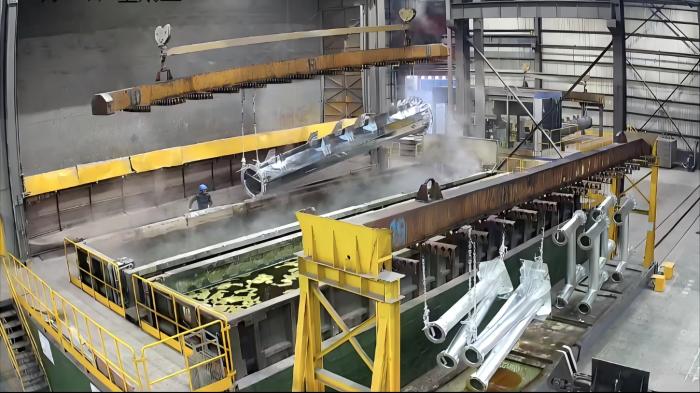
The most robust approach combines HDG with an additional topcoat of epoxy resin coating formulated for abrasion resistance. This duplex system provides the passivation and cathodic protection of zinc with a hard, sand-resistant outer layer [10†L42-L43]. When damage occurs on an out-of-reach area of the structure, ceramic coatings can be applied locally for repair rather than removing existing paint and redoing the entire surface—a significant maintenance cost advantage in remote desert locations [9†L35-L39].
Desert-ready monopoles utilize HSLA steels such as Q460 or Q355B, which maintain greater strength retention at elevated temperatures than standard grades. Heavy-duty low-alloy high-strength steel forms the backbone of extreme-environment towers, designed to withstand temperature ranges from -40°C to 70°C (-40°F to 158°F) [10†L24-L25].
Direct solar radiation on steel surfaces raises temperatures far above ambient. Solar shields mounted above equipment enclosures and critical structural nodes provide significant mitigation. Research on outdoor communication equipment demonstrates that shielding the heat sink reduces solar ingress at the worst-case time of day and facilitates greater heat dissipation; enhancing shield length induces a chimney flow, further augmenting heat dissipation [11†L24-L27].
Properly designed shields are sized to block direct radiation during peak sun hours while allowing airflow for convective cooling. In utility applications, perforated metal sunshade panels with indirect ventilation cavities can reduce exterior surface temperatures by 5–9°C on sun-exposed façades [4†L25-L26].
Desert-ready equipment cabinets incorporate passive thermal management strategies: light-colored, reflective exterior finishes to minimize solar absorption; oversized heat sinks with optimized fin geometry; and thermal-baffled ventilation that allows hot air to escape while blocking dust ingress.
All equipment cabins, cable interfaces, and connection parts in desert-ready monopoles adopt fully sealed sand-proof design, typically achieving IP67 or higher protection levels [10†L31-L32]. IP67 rating means total dust ingress protection (the "6" in IP67) and protection against immersion in water up to 1 meter [8†L15-L17].
Fully sealed enclosures create another problem: pressure differentials. As internal electronics heat and cool, pressure changes can stress seals and eventually cause failure. e-PTFE protective vents solve this contradiction. Based on expanded polytetrafluoroethylene (ePTFE) membranes, these vents allow air to pass through while blocking water and dust ingress [8†L9-L10]. They are designed to withstand harsh environmental conditions and can be easily integrated into any enclosure design [8†L12-L14].
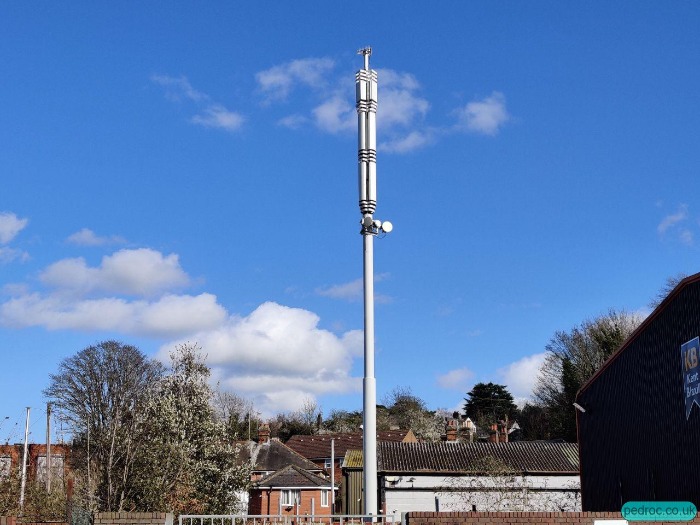
Cable penetrations into equipment cabinets represent vulnerable dust entry points. Specialized cable entry seals (such as Roxtec systems) provide gas-tight and dust-tight sealing for cables and conduits entering telecom buildings and base stations [3†L14-L17]. At antenna and flange connection points, custom pre-formed gaskets and sealants prevent dust infiltration [3†L33-L35] using industrial-strength closed-cell rubber or silicone gaskets.
Crevices—the microscopic gaps between bolted members—trap moisture and fine dust. Desert-ready monopoles use sealed fastener systems with washer undersides coated in mastic sealants. Engineering designs also seek to minimize exposed surfaces and use physical barriers against sand impact [6†L39-L40].
Desert-ready monopoles are not simply standard structures with a few modifications. They are engineered from the ground up to meet rigorous specifications.
| Design Parameter | Desert-Ready Specification | Standard Specification |
|---|---|---|
| Wind Speed Resistance | Up to 250 km/h | 160 km/h |
| Operating Temperature Range | -40°C to +70°C | -30°C to +50°C |
| Zinc Coating Thickness | ≥100 µm (HDG + epoxy topcoat) | ≥85 µm (HDG only) |
| Ingress Protection | IP67 (total dust ingress protection) | IP55 (dust protected) |
| Service Life | 30+ years in severe desert environment | 20-30 years in general environment |
These specifications are not arbitrary. The ISO9001-certified designs comply with international standards including TIA-222-G (structural), ASTM A123 (galvanizing), and IEC 60529 (IP protection), ensuring global project applicability [10†L49-L51].
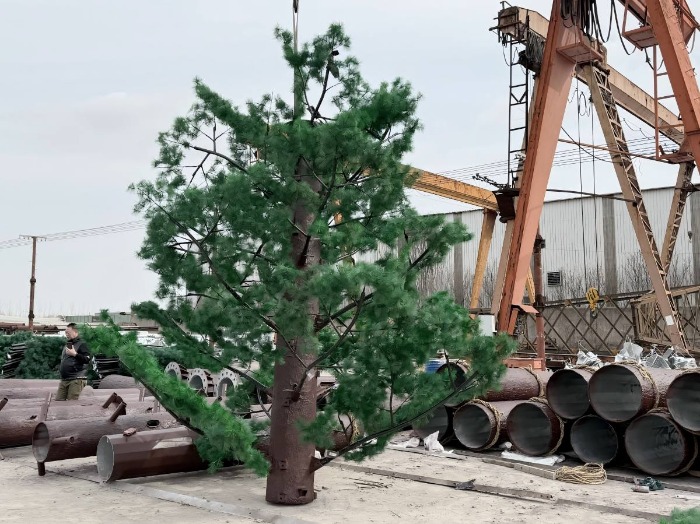
In desert nature reserves and ecologically sensitive areas, standard monopoles can be architecturally unacceptable. Advanced bionic Populus Euphratica (Euphrates poplar) towers use a heavy-duty hot-dip galvanized steel monopole structure as internal support, wrapped with a high-simulation tree appearance highly adapted to desert landscapes [10†L12-L16]. The bionic materials—high-strength anti-sand erosion fiberglass trunks and anti-UV, anti-aging HDPE leaves—have passed 10,000 hours of extreme environment aging tests, maintaining stable performance under desert sun exposure, sandstorms, and extreme temperatures for more than eight years [10†L45-L47].
Many desert locations lack grid power infrastructure. Desert-ready monopoles support integrated solar power supply systems with energy storage batteries, enabling self-sustaining off-grid operation while supporting 4G/5G communication, environmental monitoring, and border patrol applications [10†L35-L39].
In the Middle East, key environmental challenges include extreme heat (up to 50°C), UV radiation, sand abrasion, and occasional humidity from coastal influences [5†L17-L19]. Successful deployment in this region requires a holistic engineering approach: heavy-duty HDG with ≥100 µm zinc coating, duplex coating systems, IP67-sealed enclosures with e-PTFE vents, solar shielding on equipment cabinets, and high-grade structural steel with appropriate thermal derating.
The upfront investment in desert-ready specifications pays exponential returns over the service life of the tower. A standard monopole deployed in a desert environment may require significant recoating or structural intervention within 5-10 years. By contrast, a properly engineered desert-ready monopole—with heavy-gauge HDG, ceramic-enhanced topcoating, and fully sealed electronics—can provide 30+ years of service life with minimal maintenance [10†L10-L11].
Cost factors to consider include: zinc thickness directly extending corrosion protection; ceramic coatings eliminating frequent repaint cycles; sealed enclosures preventing equipment-destroying dust ingress; and solar shielding reducing cooling loads on electronics, which prolongs equipment lifespan.
The desert environment does not compromise—and neither should the infrastructure that serves it. Sand abrasion, extreme heat, and dust accumulation are not isolated nuisances but a coordinated assault on unprotected steel. Meeting this challenge requires a holistic engineering response: heavy-duty HDG with ceramic-enhanced topcoats for wear resistance; high-strength low-alloy steel and solar shielding for thermal performance; and IP67-sealed systems for dust protection.
For operators planning desert deployments, the choice is clear. A properly specified desert-ready monopole is not merely an upgraded tower—it is the difference between a decade of reliable service and a cycle of costly, continuous maintenance.
Ready to deploy reliable connectivity in the world's harshest environments? Contact our engineering team today for a custom desert-ready monopole specification and lifecycle cost analysis.
Learn more at www.alttower.com



 IPv6 network supported