

 français
 русский
 español
 العربية
Search
What Are You Looking For?
Search

The primary difference between weather radar towers and ATC (Air Traffic Control) radar towers lies in their structural stiffness, equipment configuration, and regulatory drivers. Weather radar towers typically support a heavy, dome-enclosed antenna (radome) and are optimized for continuous 24/7 atmospheric scanning, prioritizing vibration isolation and static load capacity. ATC radar towers, in contrast, often support open-array surveillance antennas and are governed by strict aviation safety standards (such as FAA or ICAO), demanding tighter deflection limits, higher natural frequencies, and absolute pointing accuracy to track fast-moving aircraft without introducing angular errors.
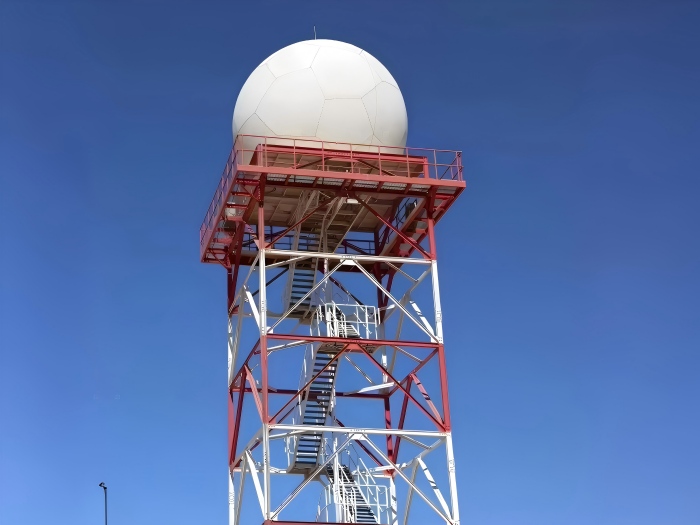
· Equipment & Enclosure: Weather radars are almost always housed inside a large, aerodynamic radome to protect the antenna from severe weather. ATC radars frequently use open-array antennas or smaller, specialized enclosures, exposing the structure to different wind dynamics.
· Deflection & Stiffness: ATC towers face stricter deflection limits than weather towers. While both require high stiffness, an ATC tower's structural movement must be kept to fractions of a degree to maintain target tracking accuracy.
· Primary Load Drivers: For a weather radar tower, the dominant load is the massive static weight of the radome, antenna, and pedestal. For an ATC tower, the dynamic load of the rotating pedestal and wind acting on the open antenna assembly is often the governing factor.
· Regulatory Frameworks: ATC towers must comply with strict civil aviation regulations (e.g., FAA Advisory Circulars, ICAO Annex 14), while weather towers primarily follow meteorological station design codes and general structural standards.
· Platform & Access: Weather radar platforms must allow technicians to safely walk around the outside of the radome. ATC platforms are designed for maintenance access to the open antenna and pedestal assemblies.
The most visible distinction between the two tower types is what sits on top.
Weather Radar Towers: The Radome Enclosure
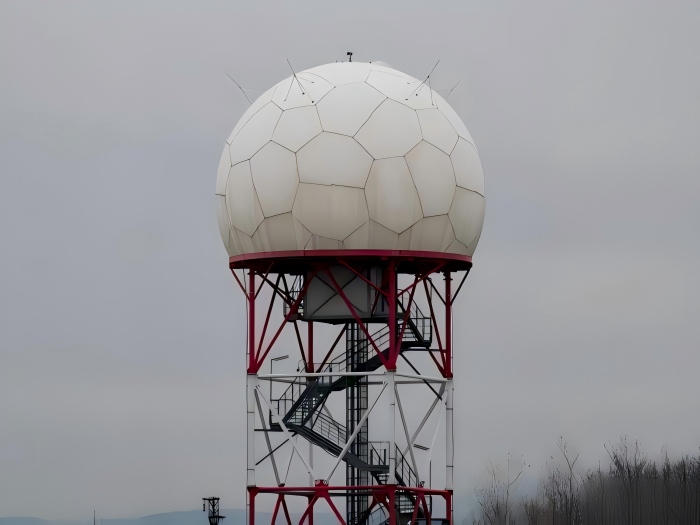
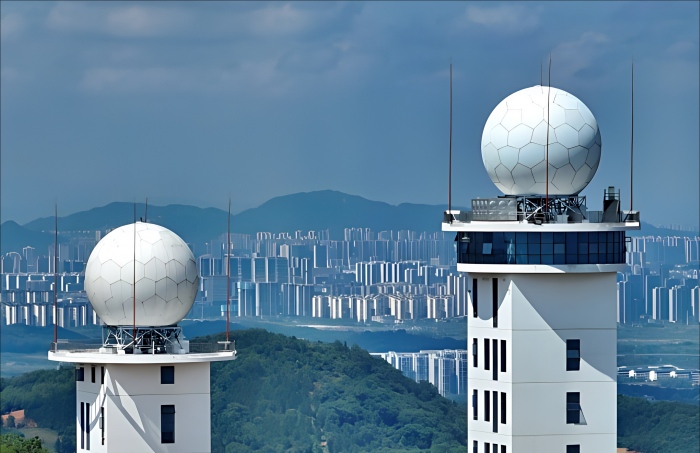
Operational weather radars are almost universally equipped with a radome—a large, spherical or truncated-spherical dome made of fiberglass or RF-transparent materials. This radome serves two critical functions: it protects the sensitive antenna and pedestal from wind, ice, and rain, and it allows continuous operation during severe weather events.
· Massive Static Load: A complete weather radar system (radome, antenna, and pedestal) can weigh upwards of 14,000 kg, with the pedestal alone accounting for a significant portion of that mass.
· Large Wind Sail Area: An 11.8-meter diameter radome presents over 100 m² of projected area to the wind, creating an enormous overturning moment at the tower base.
ATC Radar Towers: Open-Array and Specialized Antennas
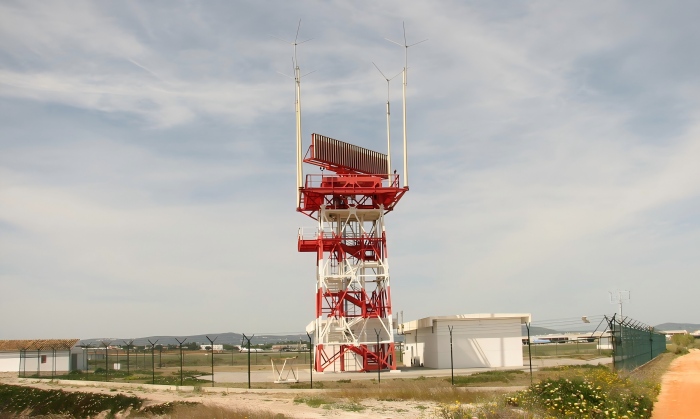
ATC radar systems, particularly Airport Surveillance Radar (ASR), often utilize open-array antennas rather than being fully enclosed in a large radome. While some ATC systems (like certain surface movement radars) may use radomes, the primary surveillance antenna is frequently exposed.
· Open-Array Advantage: Open-array antennas generally offer better performance and bearing resolution compared to comparable radome-enclosed antennas, as there is no material interfering with the RF signal.
· Dynamic Loading: The exposed, rotating array creates significant dynamic wind loads that the tower must resist, and the lack of a radome means the antenna and pedestal are directly subjected to wind gusts and ice accumulation.
Both tower types require high stiffness, but for different reasons and to different tolerances.
Weather Radar Tower Requirements
The primary structural concern for a weather radar tower is vibration isolation.
· Natural Frequency: The tower's natural frequency must be sufficiently separated from the radar's rotational frequency and servo bandwidth to avoid resonance. A common rule is that the tower's natural frequency should be at least 3 times the radar's servo bandwidth (e.g., if the servo bandwidth is 0.3 Hz, the tower's natural frequency must be >1 Hz).
· Deflection Tolerance: While important, deflection tolerances for weather radar towers are generally moderate. The goal is to maintain a stable platform for continuous scanning without excessive sway that could degrade data quality.
ATC Radar Tower Requirements
The primary structural concern for an ATC radar tower is pointing accuracy.
The platform design reflects the different maintenance needs of the two systems.
· Weather Radar Platform: Since the antenna is enclosed in a radome, the platform must be designed to allow technicians to walk safely around the outside of the radome. The platform dimensions must accommodate the radome's footprint plus a clear walkway (typically 0.9–1.2 meters wide) for maintenance personnel.
· ATC Radar Platform: The platform for an open-array ATC radar is designed for direct access to the pedestal, drive motors, and the antenna structure itself. The layout prioritizes safe access for technicians to perform mechanical and electrical maintenance on the exposed equipment.
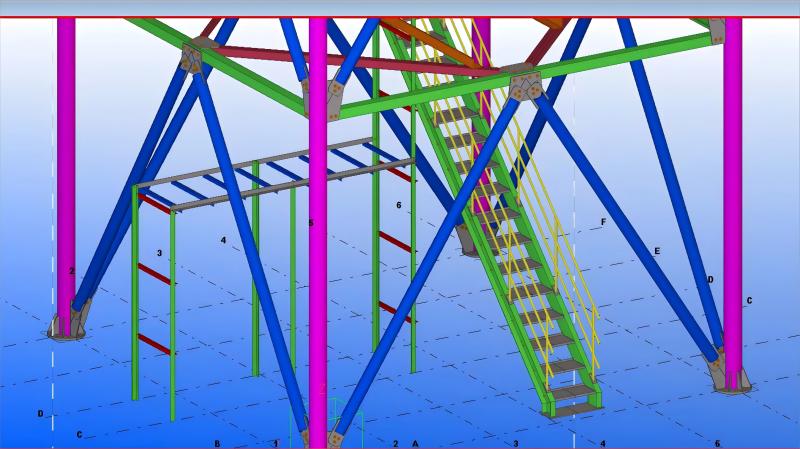
The regulatory environment shapes the design philosophy of each tower type.
· Weather Radar Towers: The design is primarily governed by meteorological station design standards (such as GB 51418 for general radar station design) and general structural codes (like ANSI/TIA-222-H for antenna-supporting structures). The focus is on reliability and data continuity.
· ATC Radar Towers: The design is heavily regulated by civil aviation authorities. In the United States, ATC radar facilities must comply with FAA Advisory Circulars and standards such as UFC 4-141-10 (Air Surveillance Radar Systems). Internationally, ICAO Annex 14 and national aviation authority standards apply. These standards mandate stricter safety factors, redundancy, and operational availability requirements.
| Parameter | Weather Radar Tower | ATC Radar Tower |
|---|---|---|
| Typical Height | 10–50 m | 15–60 m |
| Antenna Enclosure | Almost always enclosed in a large radome | Often open-array; radome use varies by system |
| Primary Load Driver | Static weight of radome + antenna + pedestal | Rotating pedestal dynamics + wind on antenna |
| Deflection Tolerance | Moderate (focused on vibration isolation) | Strict (fractions of a degree; affects tracking accuracy) |
| Natural Frequency | > 1 Hz (or ≥ 3× servo bandwidth) | High stiffness required; > 1 Hz typical |
| Regulatory Driver | Meteorological & general structural codes | FAA, ICAO, and military aviation standards |
| Platform Focus | Walkway outside the radome | Direct access to pedestal and antenna |
Understanding these differences is essential for specifying the correct tower, but executing the design requires a manufacturer with the engineering depth to handle both.

At Altai Tower, we approach each project based on its specific technical drivers:
· For Weather Radar Towers: Our engineering team focuses on calculating the massive static dead loads and the large wind sail area of the radome. We design heavily stiffened platforms to support the radome base ring and ensure the tower's natural frequency is safely above the radar's servo bandwidth. The platform layout is optimized to provide safe external walkway access around the radome.
· For ATC Radar Towers: Our design prioritizes stiffness and deflection control. We utilize advanced structural analysis (FEA) to simulate wind loads and verify that the platform's angular deflection remains within the strict aviation tolerances (e.g., 0.1°). The platform interface is CNC-machined to ensure the open-array pedestal mounts with absolute precision, maintaining the critical azimuth alignment.
By understanding the unique requirements of weather and ATC radar systems, Altai Tower delivers custom-engineered support structures that ensure optimal performance—whether the mission is tracking a storm or guiding an aircraft to a safe landing.
Q1: Can a weather radar be installed on a tower designed for an ATC radar?
A: Generally, no. While both are stiff structures, the load profiles and platform configurations are different. A weather radar introduces a massive, concentrated static load (the radome) that an ATC tower may not be designed to support. Conversely, an ATC radar requires stricter deflection tolerances that a standard weather tower might not meet. A site-specific structural analysis is required before any repurposing.
Q2: Why do weather radars need a radome but many ATC radars do not?
A: Weather radars must operate continuously during severe storms, including high winds, heavy rain, and ice. The radome protects the antenna from these forces, ensuring uninterrupted data collection. ATC radars, while critical, may have different operational protocols, and open-array antennas can offer superior signal performance without the RF loss introduced by a radome. However, the choice depends on the specific ATC system and environmental conditions.
Q3: What is the most critical load case for an ATC radar tower?
A: The most critical load case is typically the combination of maximum wind load acting on the exposed antenna array and the dynamic forces from the rotating pedestal. The tower must resist these forces while maintaining deflection within strict angular limits (fractions of a degree) to prevent tracking errors.
Q4: How does Altai Tower ensure the natural frequency of a weather radar tower is adequate?
A: We obtain the radar manufacturer's servo bandwidth specification. We then design the tower (member sizes, bracing configuration) and perform Finite Element Analysis (FEA) to verify that the tower's first natural frequency is at least 3 times the servo bandwidth, ensuring complete separation from the radar's operational frequencies.
Q5: Do ATC radar towers require special coatings?
A: Yes. ATC radar towers are often located in coastal or exposed environments. They require hot-dip galvanizing (ASTM A123) to provide decades of corrosion protection. For highly corrosive sites, a duplex coating system (galvanizing + paint) may be specified to extend the service life and maintain the structural integrity required for aviation safety.
The distinction between weather radar towers and ATC radar towers goes far beyond the shape of the antenna. It is rooted in the fundamental physics of their missions: weather radar prioritizes continuous operation and protection from the elements, while ATC radar prioritizes absolute tracking precision and regulatory compliance.
At Altai Tower, we engineer and manufacture custom steel structures that meet these distinct challenges. Whether you are deploying a radome-enclosed meteorological system or an open-array surveillance radar, our team provides the structural analysis, precision fabrication, and quality control required to ensure your radar operates flawlessly.
Ready to discuss your radar tower project? Provide our engineering team with your radar system specifications (equipment type, weight, dimensions, and servo bandwidth) and your site's environmental conditions. We will deliver a tailored structural design and a detailed proposal for your aviation or meteorological application.



 IPv6 network supported