
 français
 русский
 español
 العربية
Search
What Are You Looking For?
Search

Selecting a reliable radar tower manufacturer requires looking beyond basic fabrication capabilities to evaluate a company's in-house engineering depth, dynamic structural analysis capabilities, manufacturing precision, quality control processes, and international project delivery experience. Because aviation and weather radar towers must maintain absolute pointing accuracy under extreme environmental loads, the ideal manufacturer must demonstrate proficiency in Finite Element Analysis (FEA) for natural frequency tuning, CNC machining for perfect bolt-hole alignment, strict adherence to international standards (such as ANSI/TIA-222-H and ASTM A123), and factory trial assembly to guarantee seamless field erection.
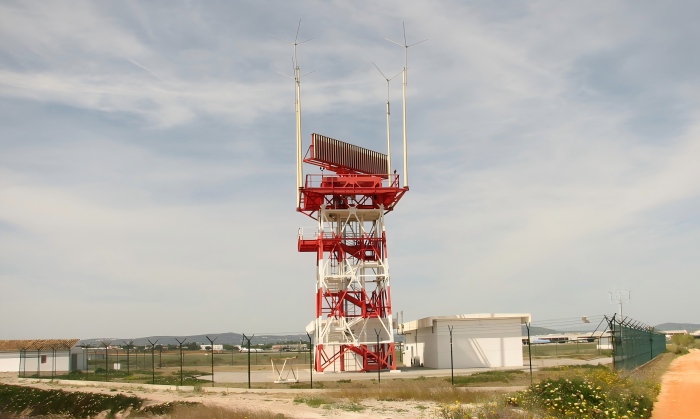
· In-House Engineering is Mandatory: A reliable manufacturer must possess in-house structural engineering capabilities, utilizing software like SAP2000 or PLS Tower to calculate wind loads, overturning moments, and natural frequency (>1 Hz) rather than just outsourcing the design.
·Dynamic Analysis over Static Design: Radar towers are highly sensitive to vibration. The manufacturer must prove they can tune the structural stiffness to avoid resonant coupling with the rotating radar antenna.
· Precision Manufacturing: The radar pedestal requires a perfectly level and precisely drilled mounting flange. CNC punching and drilling (with tolerances controlled within ±0.5 mm) are non-negotiable.
· Trial Assembly Guarantees Field Success: Pre-shipment trial assembly of tower sections is the only way to guarantee 100% bolt pass-through on site, which is critical for remote aviation sites where field modifications are highly restricted.
· Proven Anti-Corrosion Systems: Aviation and weather radar stations are often on coasts or peaks. Compliance with ASTM A123 (or ISO 1461) for hot-dip galvanizing ensures a maintenance-free lifespan of over 30 years.
Unlike standard telecom towers, radar support structures must prioritize dynamic stability. A manufacturer without strong structural engineering capabilities will over-engineer the tower (wasting material) or under-engineer it (causing radar data distortion).
When evaluating a manufacturer, demand evidence of their structural analysis process:
· FEA and Dynamic Modeling: The manufacturer should use advanced software to model the entire tower and radar payload. They must calculate the natural frequency of the system to ensure it remains safely separated from the radar's rotational frequency and wind vortex shedding.
· Deflection Limits: The design must ensure that under operational wind loads, the structural drift and twist at the antenna platform remain within the strict tolerances specified by the radar OEM (often as low as 0.1 degrees).
· Global Standards Compliance: The manufacturer must have a proven track record of designing to recognized standards such as ANSI/TIA-222-H (for antenna supporting structures) or relevant civil aviation and meteorological design codes.
Altai Tower's Approach:
At Altai Tower, our engineering team provides comprehensive in-house design support. We utilize industry-standard tools, including SAP2000 and MS Tower, to perform rigorous Finite Element Analysis (FEA). By simulating site-specific wind and ice loads, we precisely tune the tower's structural stiffness to meet the strict dynamic requirements of aviation and weather radar systems.
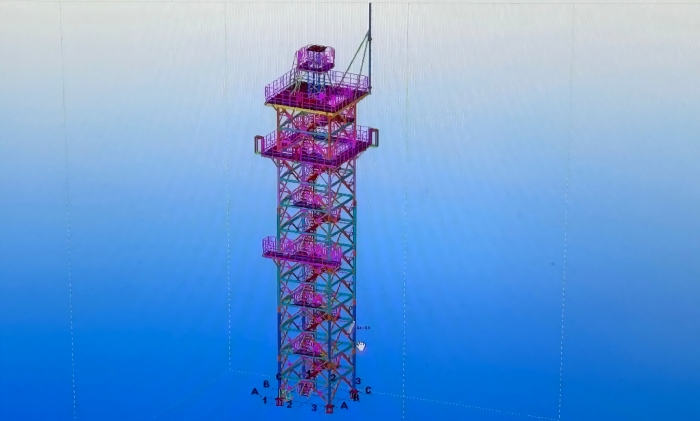
The theoretical design is only as good as the manufacturing process. A radar pedestal is a precision-engineered machine; it will not fit onto a poorly fabricated platform.
· CNC Machining: Look for manufacturers using Computer Numerical Control (CNC) machinery for cutting, punching, and drilling. Manual processes often introduce errors that compound across hundreds of bolted connections.
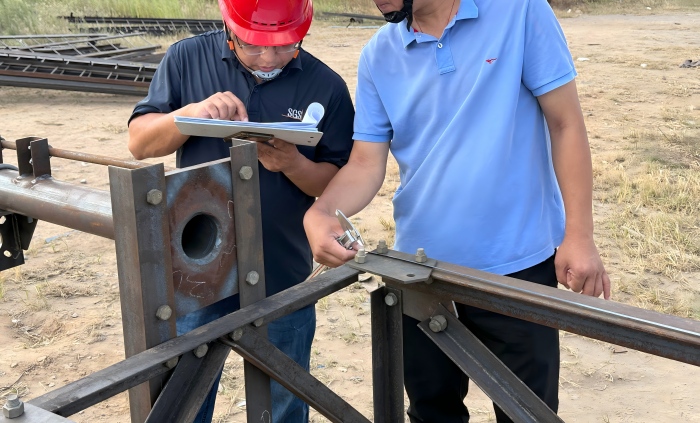
· Welding Standards: Critical welds, especially at the tower base and platform connections, must be performed by certified welders according to standards like AWS D1.1, with Non-Destructive Testing (NDT) used to verify weld integrity.
· Platform Diaphragm Design: The platform must be fabricated as a rigid diaphragm, with heavy cross-bracing, to distribute the concentrated weight of the radar system without local flexing.
Altai Tower' s Capabilities:
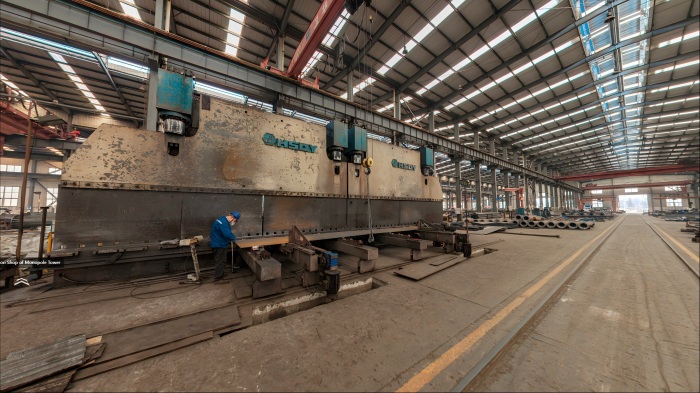
We operate a fully equipped fabrication facility featuring CNC laser cutting, a 4000-ton hydraulic CNC bending machine, and automated welding robots. Our manufacturing processes guarantee that bolt holes are punched with sub-millimeter accuracy, ensuring that the radar platform's mounting interface aligns perfectly with your equipment.
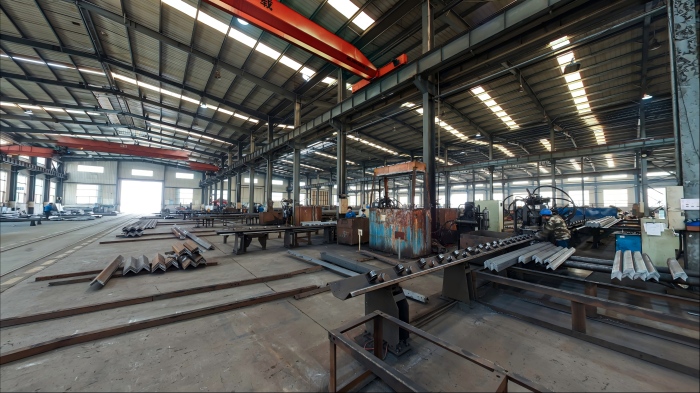
Quality control is not just a final inspection; it is a continuous process. For international B2B projects, the ability to verify quality before shipping is critical.
· Material Traceability: Can the manufacturer trace the steel back to the mill certificate? Are chemical and mechanical properties verified?
· Galvanizing Inspection: The hot-dip galvanizing (HDG) thickness must be tested (typically ≥85 μm per ASTM A123), and the coating must be free of bare spots or sharp drips.
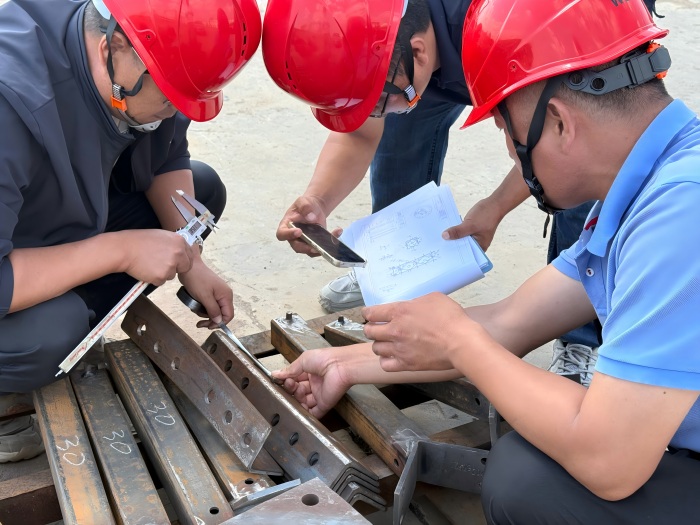
· Trial Assembly (Pre-Assembly): This is the ultimate test. The manufacturer should conduct a trial assembly of representative tower sections at the factory. This proves that the components fit together perfectly and eliminates the risk of on-site erection delays.
Altai Tower's Quality Assurance:
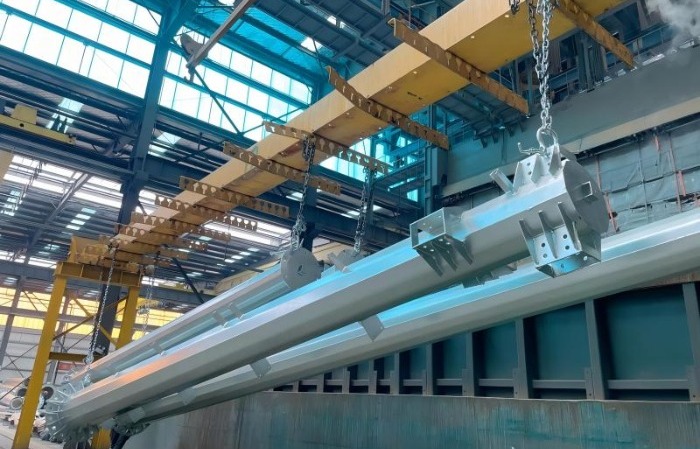
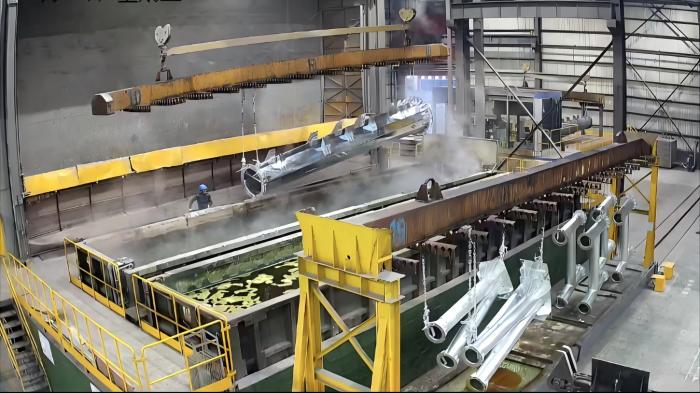
Every Altai Tower undergoes stringent quality control, from raw material intake to final packaging. We perform pre-delivery trial assemblies on representative tower nodes to guarantee 100% bolt pass-through. Our in-house hot-dip galvanizing workshop ensures that all steel components receive uniform, long-lasting corrosion protection.
Radar towers are frequently installed in exposed locations—coastal areas, mountain ridges, or open plains. Corrosion not only degrades appearance but can also alter the tower's structural dynamics over time.
Finally, evaluate the manufacturer's logistical capabilities. Radar towers are large, heavy, and complex to ship.
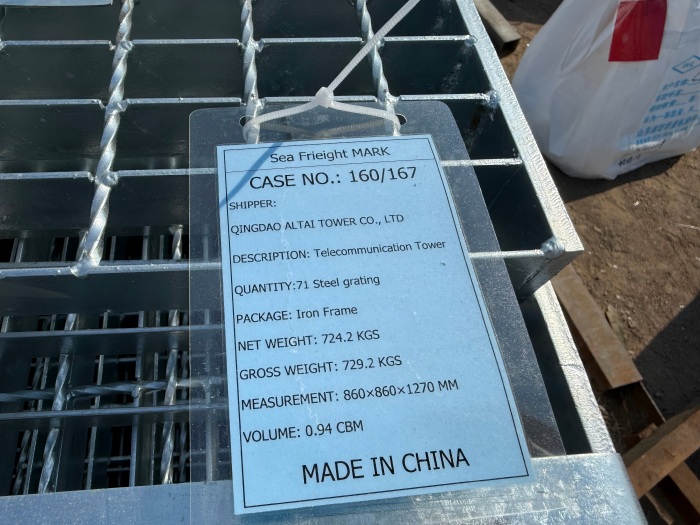
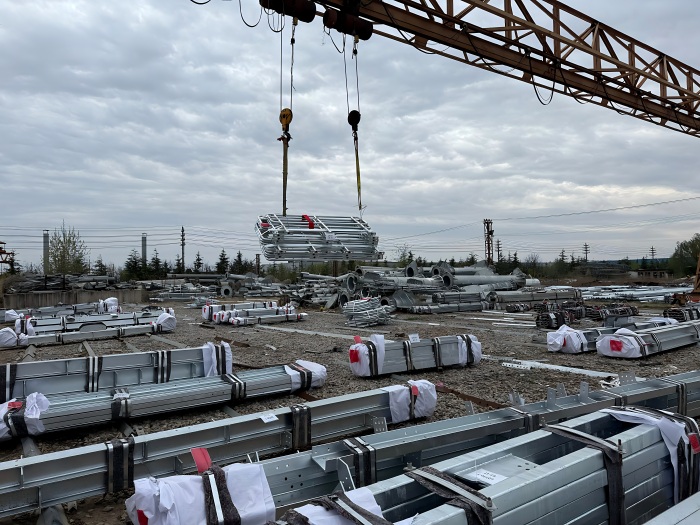
· Modular Packaging: Components should be bundled and labeled according to the erection sequence. Properly designed steel frames and moisture-proof wrapping prevent damage during ocean transit.
· Documentation: A reliable manufacturer provides comprehensive documentation, including structural drawings, bolt lists, quality certificates, and installation manuals.
· Delivery Experience: Ask for examples of past international deliveries. Experience with customs clearance and shipping to remote locations is a significant advantage.
| Evaluation Criteria | Low-Quality Manufacturer | Reliable Manufacturer (e.g., Altai Tower) |
|---|---|---|
| Design Capability | Outsources design; uses basic templates | In-house FEA, dynamic analysis, natural frequency tuning |
| Fabrication | Manual cutting and drilling; higher error margin | CNC machining, automated welding, ±0.5mm hole tolerance |
| Quality Control | Basic visual inspection only | Full NDT on welds, galvanizing thickness testing |
| Pre-Shipment Verification | None; relies on site fixes | 100% Factory Trial Assembly of critical sections |
| Corrosion Protection | Inconsistent zinc coating | In-house Hot-Dip Galvanizing per ASTM A123 |
| Project Delivery | Loose parts, poor labeling | Modular, sequence-numbered export packaging |
Q1: Why is a manufacturer's in-house FEA capability important for a radar tower?
A: A radar tower cannot simply be built "stronger" to be safe; it must be built "stiffer" to meet precise natural frequency targets and avoid resonance. An in-house FEA team ensures the tower is optimized to meet the radar OEM's strict vibration and deflection limits without excessive weight or cost.
Q2: How do I verify the manufacturer's fabrication precision before shipping?
A: You should request a Factory Acceptance Test (FAT) plan, including the trial assembly report. A reliable manufacturer will invite third-party inspectors or the client's representatives to witness the trial assembly, verifying that all bolt holes align and the radar pedestal mounting interface is perfectly level.
Q3: What standards should the hot-dip galvanizing comply with?
A: For international projects, the coating should meet ISO 1461. For North American projects, it should meet ASTM A123. The minimum average coating thickness for steel over 6mm (like tower legs) is typically 85 μm (or 100 μm for heavier sections).
Q4: Can the manufacturer interface directly with our radar equipment supplier?
A: Yes. A high-quality manufacturer will require the radar OEM's interface control drawings (ICD) to ensure the platform bolt patterns, cable entry points, and load-bearing requirements match the radar pedestal exactly.
Q5: What is the typical lead time for a custom radar tower?
A: Lead times vary based on complexity and order volume. For a standard radar support tower, a manufacturer with an established supply chain and in-house galvanizing—like Altai Tower—can typically deliver within 30 days after drawing approval and payment.
Selecting a radar tower manufacturer is a strategic decision that impacts the safety and accuracy of your critical aviation or weather infrastructure. By evaluating the manufacturer’s engineering software, dynamic analysis capabilities, CNC manufacturing precision, trial assembly processes, and export packaging standards, you can mitigate project risks and ensure a seamless deployment.
At Altai Tower, we provide end-to-end solutions for radar support structures, combining advanced structural engineering with precision CNC fabrication and in-house hot-dip galvanizing.
Ready to discuss your radar tower project? Contact our engineering team today. Share your radar equipment specifications, site location, and structural requirements, and we will deliver a fully optimized design and detailed manufacturing proposal.



 IPv6 network supported