

 français
 русский
 español
 العربية
Search
What Are You Looking For?
Search

In the competitive and cost-sensitive world of lattice tower fabrication, every kilogram of steel counts. While the fundamental geometry and design of a tower dictate its stability, the choice of material is a powerful lever for optimizing both performance and profitability. The strategic shift from standard mild steel to High-Strength Low-Alloy (HSLA) steel, specifically grades like Q355B, represents a paradigm shift in engineering economics. This blog analyzes how utilizing steel with a higher yield strength enables significant reductions in material usage and overall project cost without compromising structural integrity.
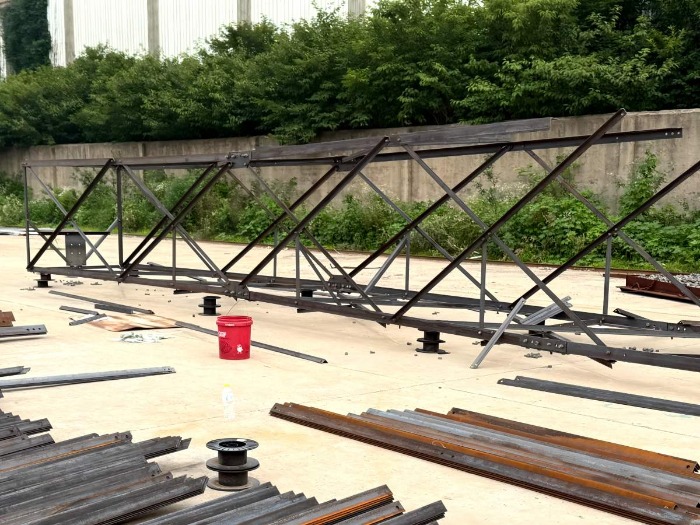
To understand the advantage, we must first compare the material properties. In the Chinese GB/T standard system, widely adopted in global infrastructure, Q235B is a common carbon structural steel, while Q355B is a prevalent HSLA steel.
| Property | Q235B Steel | Q345B Steel | Advantage for Q345B |
|---|---|---|---|
| Yield Strength (ReH) | ≥235 MPa | ≥345 MPa | ~47% higher yield strength. |
| Ultimate Tensile Strength | 370-500 MPa | 470-630 MPa | Higher load-bearing capacity before failure. |
| Notable Composition | Primarily Iron-Carbon | Adds alloying elements like Manganese (Mn) | Enhances strength and toughness. |
| Typical Application | General structures, low-rise towers | Heavy-duty structures, high-rise and extra-high-voltage towers | Enables lighter, stronger designs for demanding applications. |
This ~47% increase in yield strength is the key that unlocks downstream efficiencies. Yield strength is the stress at which a material begins to deform plastically; a higher value means the same cross-section of steel can safely support a much greater load.
The core principle is straightforward: For a given load case (wind, weight, ice), a higher material strength allows for the use of smaller, thinner cross-sections.
In lattice tower design, the primary members are angle steels. The required size (leg width and thickness) of an angle member is determined through structural analysis to ensure it can withstand compressive, tensile, and buckling forces. When designing with Q355B instead of Q235B:
Member Resizing: For many members, especially those governed by yield strength rather than slenderness ratio (buckling), the required cross-sectional area is inversely proportional to the yield strength. A member sized with Q235B can often be replaced with a smaller-sized Q355B angle.
Thickness Reduction: Similarly, where plate thickness in gusset plates or other components is governed by stress, a higher strength allows for a reduction in thickness.
Cascading Effect: Lighter primary members lead to reduced dead load, which in turn slightly reduces the load on supporting members and the foundation, creating a compounding weight-saving effect.
Result: The total steel tonnage of the tower can be reduced by 15% to 25% for an equivalent structure designed to the same safety factors and performance standards (e.g., TIA-222, EN 1993-3-1).
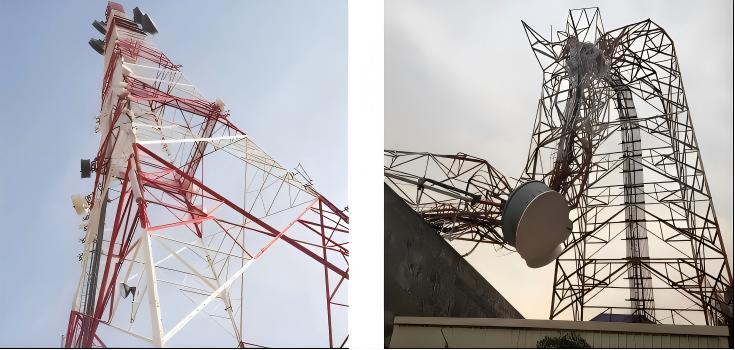
The financial impact of this weight reduction is direct and multi-faceted:
1. Direct Material Cost Savings:
While Q355B steel carries a premium of approximately 5-12% per tonne over Q235B, the substantial reduction in tonnage required results in a net reduction in total material purchase cost.
Simplified Example: A tower requiring 10 tonnes of Q235B might only require 7.8 tonnes of Q355B (assuming 22% weight savings).
Cost with Q235B: 10 tonnes * $X/tonne = 10X
Cost with Q355B: 7.8 tonnes * (1.08 * $X)/tonne = ~8.42X
Net Savings: ~16% on raw steel material cost.
2. Logistics and Handling Cost Reduction:
Lighter towers have a ripple effect on project logistics:
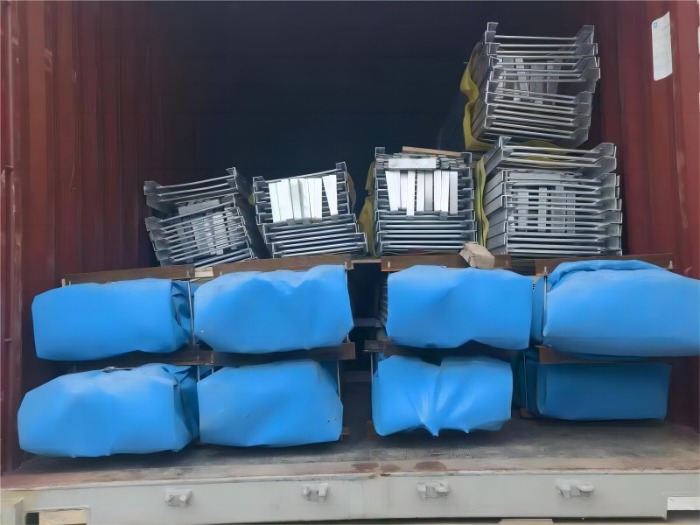
Transportation: Fewer truckloads are required to deliver materials to the fabrication shop and finished components to the job site, reducing freight costs.
Fabrication Handling: Lighter components are easier to move, rotate, and position in the workshop, potentially improving fabrication efficiency.
Installation: Lighter tower segments reduce crane capacity requirements and speed up erection cycles, leading to lower equipment rental and labor costs on-site.
3. Foundation Cost Optimization:
A lighter superstructure imposes lower vertical loads and overturning moments on the foundation. This can translate to:
Smaller concrete volume for gravity foundations.
Shorter or fewer piles for deep foundations.
Reduced earthworks and rebar requirements.
This delivers significant savings in one of the most costly and variable portions of a tower project.
Enhanced Performance: The higher toughness and better low-temperature impact performance of Q355B can improve the tower's durability and reliability in harsh environments.
Sustainability Profile: Reduced steel consumption directly lowers the embodied carbon footprint of the project, contributing to more sustainable infrastructure development.
Design Flexibility: The strength-to-weight advantage can enable taller towers, greater antenna loading capacity, or more compact designs for space-constrained sites.
Specifying Q355B steel in lattice tower fabrication is a prime example of value engineering. It moves beyond simply selecting the lowest-cost material per tonne to a holistic analysis of total project economics. By leveraging its higher yield strength to enable intelligent down-gauging and section optimization, Q355B delivers a lighter, high-performance structure at a lower overall installed cost.
For engineers and project managers focused on building efficient, reliable, and cost-competitive telecommunication and power transmission infrastructure, Q355B is not just an alternative material—it is a strategic tool for financial and technical optimization.
Learn more at www.alttower.com



 IPv6 network supported