

 français
 русский
 español
 العربية
Search
What Are You Looking For?
Search

Specifying wind and ice load requirements for steel monopole towers in mountainous regions requires a systematic engineering approach that accounts for the unique microclimatic and topographical conditions found at higher elevations. Unlike flat-terrain installations, mountain-based towers face accelerated wind speeds, concentrated ice formation, and more extreme environmental loading combinations that demand careful specification during the design phase.
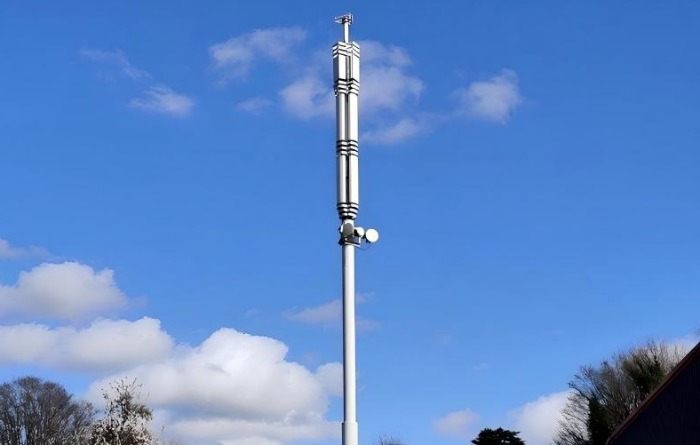
This guide provides a comprehensive framework for engineers, procurers, and network planners to accurately determine site-specific load parameters, align them with applicable standards, and ensure the tower is structurally adequate for its intended operational life.
The foundational document for antenna-supporting structures in North America and many international jurisdictions is ANSI/TIA-222-H, the Structural Standard for Antenna Supporting Structures and Antennas, published in 2017 and effective January 1, 2018. This revision superseded TIA-222-G and introduced significant updates that directly affect mountainous installations. The International Building Code (IBC) references TIA-222-H for antenna-supporting structures and antennas, making adoption effectively mandatory across most US jurisdictions.
For meteorological and atmospheric icing loads, ASCE/SEI 7-22 provides the underlying framework, including wind maps, ice maps, and topographic adjustment methodologies. TIA-222-H incorporates ASCE 7-16 wind maps with ultimate wind speeds based on risk category, plus enhanced topographic effects provisions. The 2018 IBC adopts ASCE 7-16 for wind provisions, creating a consistent standard chain from building codes through tower-specific standards.
In China and other Asian markets, the equivalent design approach follows GB 50009, the Load Code for the Design of Building Structures. The specification requires 50-year return period maximum wind speeds, converted to basic wind pressure (kN/m²) from local meteorological data. Beijing specifies 0.45 kN/m² for a 50-year return period, while Guangzhou requires 0.50 kN/m². For mountain sites without reliable data, the Chinese standard recommends a conservative multiplier: adopt 1.1 times the wind speed of nearby flat terrain, not less than 25 m/s.
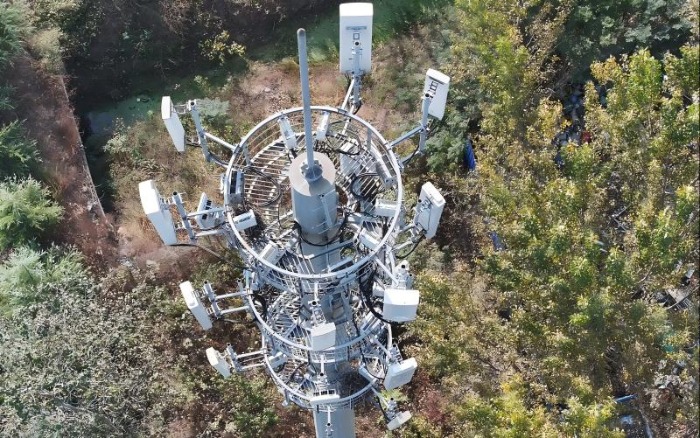
TIA-222-H establishes four primary site-specific design parameters for properly determining acting loads.
Risk Category: The structure’s risk category (I–IV) dictates minimum wind, ice, and earthquake loading requirements. Risk Category II is the default for commercial telecommunications where service interruption is acceptable. However, mountain towers supporting public safety networks, emergency communications, or critical infrastructure may merit Risk Category III, requiring higher wind speeds and increased safety factors.
Environmental Loads: TIA-222-H specifies ultimate wind speeds (3-second gusts) and ice thicknesses derived from ASCE 7 maps based on computer modeling and empirical observations. Prior to TIA-222-F (2005), explicit ice loading requirements did not exist, making older structures particularly vulnerable in mountainous ice-prone regions.
Site Exposure Category: This classification determines the wind load multiplier based on ground surface roughness and the presence of nearby obstructions, vegetation, and constructed facilities. For mountain ridge and peak installations, Exposure Category C (open terrain with scattered obstructions below 30 feet) applies. Exposure Category D, for unobstructed water surfaces, is relevant for coastal mountain deployments.
Site Topographic Category: Mountainous sites require topographic adjustments, as abrupt changes in terrain can significantly increase wind speed over the basic wind speed derived from ASCE 7 maps. This category accounts for wind speed-up effects from isolated hills, ridges, and escarpments. Under TIA-222-H, three methodologies are available: simplified, rigorous, and site-specific approaches.
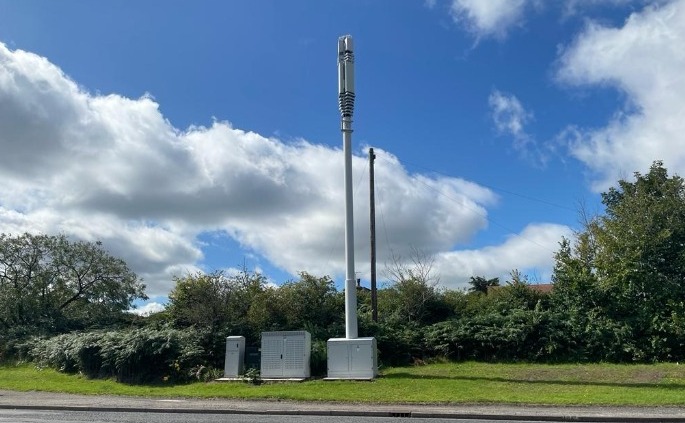
Step 1: Establish Ultimate Wind Speed. TIA-222-H wind speeds are based on ultimate (not nominal) 3-second gust wind speeds, with separate maps for Risk Categories II, III, and IV. These maps use double the number of reporting stations and longer record periods than previous revisions, with improved hurricane model simulations.
Step 2: Apply Topographic Factor Kzt. Kzt accounts for wind speed-up from terrain acceleration. The ASCE 7 Chapter 26.8 topographic factor appears directly in the velocity pressure equation.
The factor is calculated as:
Kzt = (1 + K₁ + K₂ + K₃)²
Each variable corresponds to terrain geometry and building location:
K₁ accounts for feature type (hill, ridge, or escarpment) and maximum speed-up
K₂ adjusts for the structure’s distance from the crest
K₃ adjusts for the structure’s height above local terrain
Kzt applies only when the following criteria are met: the structure is in the upper half of a hill or ridge or near the crest of an escarpment; the ratio of feature height to length (H/Lh) is at least 0.2; and feature height H is at least 15 ft for Exposure C or D, or 60 ft for Exposure B.
The TIA-222-H velocity pressure equation incorporates topographic effects directly. The velocity pressure coefficient Kzt modifies the basic wind speed based on wind speed-up from the topographic feature. For flat or gently sloped ground, Kzt defaults to 1.0, meaning no velocity pressure adjustment.
Step 3: Apply Exposure Coefficient Kz. The exposure coefficient, based on Exposure Category, accounts for variation in wind speed with height above ground. For mountainous sites, Exposure Category C is typical, with terrain roughness and surface irregularity also considered for each wind direction as defined in ASCE 7 Chapter 26.7.
Step 4: Apply Wind Directionality Factor Kd. Kd accounts for the reduced probability of maximum winds occurring from the direction producing maximum load on the structure. For lattice towers, typical values range from 0.85 to 0.95.
Step 5: Apply Ground Elevation Factor Ke. TIA-222-H added a ground elevation factor to account for reduced air density at higher elevations. This factor reflects that less dense air exerts lower pressure than the standard atmospheric assumptions used to derive wind maps. For towers above 3,000 ft elevation, the effect is non-negligible and must be included.
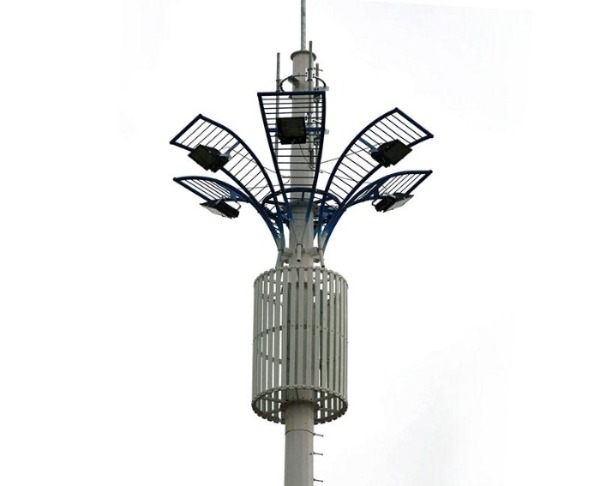
Ice loads are determined using the volume or cross-sectional area of glaze ice formed on all exposed surfaces of structural members, components, and appurtenances. The ASCE 7 ice thickness maps provide the design ice thickness for a given location, determined through generalized Pareto distribution fitting of extreme ice thickness samples.
For ice-prone mountain regions, an understanding of the specific ice accretion mechanism is essential. Glaze ice from freezing rain, rime ice from in-cloud accretion, and wet snow accretion each produce different density distributions. The governing design is generally the heaviest combination of ice thickness with concurrently probable wind speed.
TIA-222-H specifies that the ice loading combination is intended to represent a maximum vertical load condition with a 1.2 dead load factor to ensure overall stability and adequate member strengths. Unlike wind loads, minimum dead load conditions are not required for the ice load case.
Two ice loading combinations generally govern monopole design. The first is a maximum ice thickness condition with a corresponding wind speed, which produces the maximum vertical load. The second is a lower ice thickness with a higher concurrent wind speed, which may govern the maximum lateral load. Both must be considered, as the governing condition depends on the structure’s aspect ratio, member slenderness, and foundation configuration.
Because the ASCE 7 ice map indicates only one ice thickness for a given location, it inherently covers both loading conditions. This was accomplished by specifying the maximum ice thickness with an equivalent calculated wind speed determined such that the governing lateral load condition would be obtained.
For guyed mast mountain installations (including meteorology towers for wind energy development, often exceeding 100 m), extreme ice loading can govern stability and strength requirements. Ice weight and wind pressure combine, increasing guy tension and imposing large downward forces on the mast. This effect is particularly acute for monopoles in exposed ridge-top locations, where the tower is fully exposed without shielding from adjacent structures.
TIA-222-H employs ultimate-strength design principles. The following load combinations must be considered, with appropriate load factors:
| Load Combination | Load Factors | Application |
|---|---|---|
| Dead + Wind (Extreme) | 1.2D + 1.0W (ultimate wind speed) | Governs in non-icing mountainous regions, exposure and topographic categories |
| Dead + Wind (Service) | 1.0D + 0.5W (service wind speed) | Serviceability limits: deflection, twist and sway |
| Dead + Ice + Wind (Extreme) | 1.2D + 1.0I + 1.0W | Governs in heavy-icing mountain zones, combination of max ice thickness with concurrent wind |
| Dead + Ice + Wind (Extreme: alternate) | 1.2D + 1.0I (reduced) + 1.0W (increased) | May produce higher lateral loads despite lower ice thickness |
| Dead + Earthquake | 1.2D + 1.0E | Governs in high-seismic mountain zones |
The twist and sway requirement under TIA-222-H must be maintained through operational wind speeds of 70 mph (approximately 113 km/h). The tower’s twist and sway at all antenna mounting elevations must be determined by analytical methods and noted on the formal stress analysis.
The 0.00256 constant in the velocity pressure formula assumes standard atmosphere at sea level. For high-elevation sites, the ground elevation factor (Ke) must be used to adjust for reduced air density at altitude.
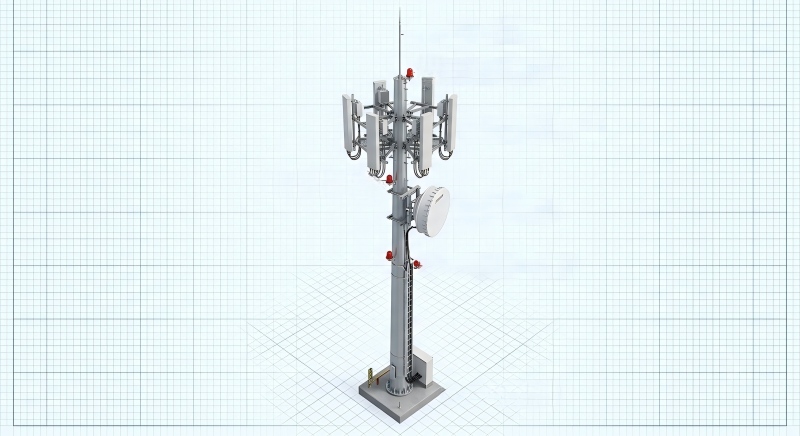
Topographic Wind Speed-Up. Peak wind speeds on ridge tops can be 1.5 to 2 times greater than nearby flat-terrain winds due to flow acceleration, with wind speed increasing by a factor of up to 1.64 on hill crests. The ASCE 7 methodology captures this phenomenon through the Kzt factor, which must be applied whenever the site location lies within the upper half of a topographic feature meeting specified H/Lh and height criteria.
Microclimate and Terrain Interaction. Mountain ranges generate complex mesoscale circulation patterns. Ridge-to-ridge channeling, orographic lift, and thermal valley flows all create localized wind regimes exceeding regional design wind speeds. Engineers should obtain site-specific wind studies for major installations rather than relying solely on ASCE 7 maps. Computational fluid dynamics (CFD) simulations or wind tunnel tests may be required for critical infrastructure.
Concurrent Ice and Wind Scenarios. Heavy icing events often coincide with moderate wind speeds, while high wind events typically occur without significant ice accretion. The governing condition for monopole bending strength may be the lower-ice/higher-wind combination, while the governing condition for foundation uplift capacity may be the high-ice/lower-wind case. Mountainous microclimates can produce both scenarios, and both must be evaluated.
Ice Shedding and Imbalance. As ice accretes unevenly on the tower and antennas, subsequent shedding or melting produces temporary unbalanced loading. This dynamic condition must be considered at connection points. The TIA-222-H commentary clarifies that the variance in dead loads is insignificant relative to the approximate method of determining the weight of ice for extreme ice conditions. However, non-uniform ice distribution cannot be ignored in structural analysis.
Elevation-Dependent Properties. Air density decreases with altitude, reducing the momentum transfer from wind to the structure. This factor (Ke) partially offsets the increased design wind speed at mountain sites—an aspect frequently overlooked in simplified specifications.
Foundation designs require additional consideration of load factors applied to dead loads. The weight of soil directly supported by the foundation and the weight of the foundation itself are both considered as dead loads for the loading combination under consideration, with a 1.2 or 0.9 load factor.
Soil weight outside the foundation perimeter that resists uplift or overturning reactions is considered a nominal soil strength with a 0.75 resistance factor as specified in TIA-222-H Section 9.4. For guyed mast applications, a unique situation exists where only a maximum dead load combination with a 1.2 dead load factor is required; anchorage reactions from each loading combination must be considered for guy anchor design.
Mountain rock sockets, frost-protected shallow foundations for seasonally frozen ground, and driven piles for steep, inaccessible sites must all be designed for the highest of the calculated load combinations. The geotechnical investigation must consider soil creep on slopes, frost depth, and differential settlement potential.
The specifications provided to manufacturers must include site coordinates, basic wind speed, risk category, exposure category, topographic category, design ice thickness, concurrent wind speed with ice, ground elevation, Kzt-calculated wind speed adjustment, and soil parameters for foundation design.
Analytical verification should include modal analysis to confirm that the tower’s fundamental natural frequency is sufficiently separated from forcing frequencies to avoid resonant vibration. Parametric studies should consider variations in wind direction and the uncertainty in ice thickness for the site. The manufacturer’s stress analysis must account for all specified load conditions, using TIA-222-H load combinations. The response spectrum method in TIA-222-H Section 2.7 must be applied for seismic loading in active mountain zones.
Ignoring topographic Kzt: Using Kzt = 1.0 for sites located on hill crests or ridge tops can under-design monopoles by 30% or more. TIA-222-H requires topographic factor application when the structure lies in the upper half of a qualifying feature. Incorrect omission may result from reliance on adjacent flat-terrain wind maps from older projects.
Underspecifying ice loads: Mountainous regions often exhibit ice thicknesses exceeding ASCE 7 maps due to localized orographic cloud effects and higher-altitude atmospheric icing. The design ice thickness for monitoring must be verified with local meteorological data where available.
Single load case oversight: Using only maximum ice thickness with concurrent wind speed, while ignoring the reduced-ice/higher-wind combination, can under-design lateral capacity and foundation overturning resistance. For tall, slender monopoles in moderate-icing zones, the reduced-ice scenario may govern lateral loading and must be evaluated.
Specifying wind and ice loads for steel monopole towers in mountainous regions requires systematic application of TIA-222-H, ASCE 7, and relevant local standards, with site-specific attention to topographic wind speed-up, realistic ice thickness determination, and comprehensive load combinations. By following the methodology outlined in this guide, engineers and procurers can ensure that towers are both structurally adequate for the mountain environment and appropriately sized to avoid excessive material cost. The investment in accurate specification directly translates to safe, reliable, and cost-effective infrastructure that endures the unique challenges of high-elevation deployments.
Learn more at www.alttower.com



 IPv6 network supported