
 français
 русский
 español
 العربية
Search
What Are You Looking For?
Search

Observation guard towers are elevated steel structures—typically 6 to 50 meters tall—that provide security personnel with a 360-degree vantage point for monitoring critical infrastructure facilities. Deployed at power plants, dams, and ports, these towers form the elevated component of a layered security strategy, combining human observation with advanced surveillance technology (cameras, thermal imaging, radar, and AI analytics) to detect, deter, and respond to threats before they reach sensitive assets. Hot-dip galvanized per ASTM A123 standards, modern observation towers deliver 30 to 50 years of maintenance-free service life even in harsh coastal or industrial environments.
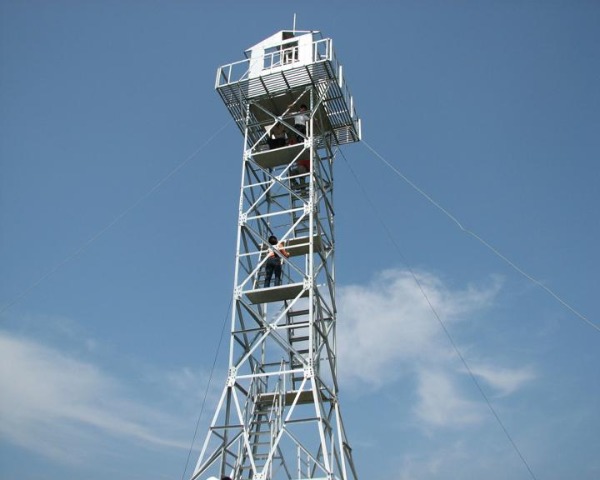
· Elevated vantage point is irreplaceable: height gives security teams the ability to see beyond fences, detect intruders early, and coordinate ground response
· Three primary applications: power plants (perimeter intrusion prevention and sabotage deterrence), dams (wide-area surveillance of water infrastructure and flood zones), and ports (maritime domain awareness and cargo security)
· ASTM A123 hot-dip galvanizing with 85–100μm zinc coating ensures 30–50 year corrosion protection, critical for facilities exposed to salt spray, moisture, and industrial pollutants
· Integrated technology turns observation towers into surveillance hubs: PTZ cameras, thermal imaging, radar, AI motion detection, and drone integration
· Layered defense: towers work in concert with ground patrols, access control systems, and mobile surveillance units to create a comprehensive security ecosystem
· Modular design enables rapid deployment: towers can be fixed (permanent installations), mobile trailer-mounted (relocatable in under 2 hours), or roof-mounted (zero ground footprint)
Critical infrastructure sites—power plants, dams, ports, substations, and industrial facilities—are high-value targets for intrusion, sabotage, theft, and terrorism. These facilities share common security challenges:
· Large, unprotected perimeters: Substations, rail yards, pipelines, and water treatment plants often span wide areas with limited fencing, lighting, or permanent surveillance
· Remote or temporary locations: Many sites are far from population centers or operate seasonally, making permanent security installations costly
· Theft, vandalism, and sabotage: Copper theft, equipment damage, trespassing, and intentional disruption pose ongoing risks that can result in service outages and public safety hazards
· Limited on-site personnel: Minimal staffing overnight or during maintenance shutdowns increases vulnerability
Observation towers address these challenges by providing unmatched visibility, psychological deterrence, and rapid threat response. A tower signals that the site is monitored and defended—a powerful deterrent to would-be intruders.
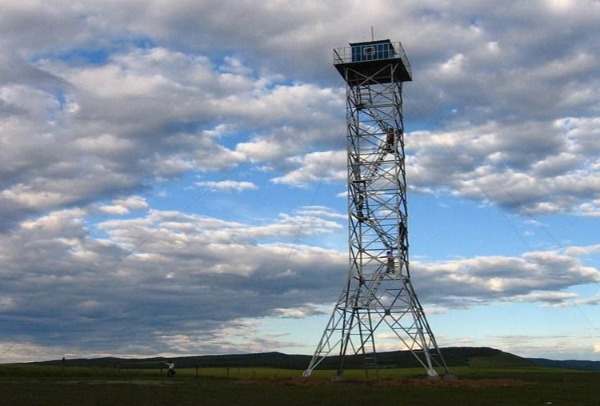
Nuclear power plants, coal-fired stations, gas turbines, substations, and renewable energy facilities face diverse threats: unauthorized intrusion, sabotage of critical equipment, copper theft, and coordinated attacks. A single breach can have catastrophic consequences for public safety and grid stability.
· Early detection: Elevated towers allow security teams to spot intruders attempting to cut fences, climb barriers, or force access points before they reach critical areas
· 360-degree surveillance: Towers provide panoramic visibility over sprawling plant layouts, transformer yards, cooling towers, and fuel storage areas
· Integration with plant systems: Towers serve as surveillance hubs, hosting PTZ cameras, thermal imagers, and motion sensors that feed into centralized security operations centers
· Ballistic protection: For high-risk facilities, towers can be equipped with NIJ Level III steel plating to protect personnel from small arms fire
Modern guard towers act as surveillance centers that help security teams track and respond to potential threats. At nuclear power plants and substations, stopping intruders before they reach the site is critical.
Dams, reservoirs, and water treatment facilities are essential to public water supply, flood control, and hydroelectric power generation. They are often located in remote areas, spanning vast reservoirs and river systems, making comprehensive surveillance logistically challenging.
· Wide-area surveillance: Towers positioned at strategic points along dam perimeters and reservoir shorelines provide visibility over large water bodies and surrounding terrain
· Flood zone monitoring: Mobile surveillance towers can be rapidly deployed to monitor flood areas, dike integrity, and water levels during extreme weather events
· Dual-purpose infrastructure: Towers can host both security cameras and environmental sensors for dam safety monitoring, water level tracking, and early flood warning systems
· Off-grid capability: Solar-powered surveillance systems create self-sufficient security outposts at remote dam sites, operating 24/7 without relying on grid power
The use of VIDEO GUARD monitoring towers has significantly improved security in flood areas, providing flexible, around-the-clock surveillance.
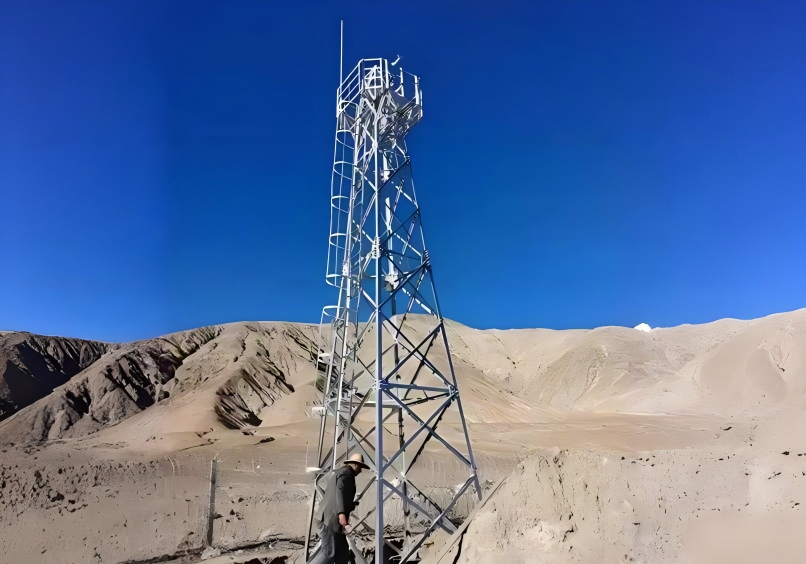
Ports are complex, high-traffic environments with multiple entry points, extensive waterfronts, vast cargo storage areas, and constant vessel movement. Security threats include unauthorized access, cargo theft, smuggling, terrorism, and sabotage.
· Maritime domain awareness: Towers equipped with high-resolution radars, surveillance cameras, and GPS systems provide comprehensive views of ship movements in and around the port
· Coastal and waterfront surveillance: Port towers monitor vessel approaches, detect unauthorized watercraft, and track swimmers or divers attempting to breach security
· Cargo yard monitoring: Elevated vantage points allow security teams to oversee vast container storage areas, identify suspicious activity, and coordinate response
· Harsh environment durability: Towers deployed in ports must withstand salt spray, high winds, and marine corrosion—hot-dip galvanizing to ASTM A123 is essential for longevity
An advanced control tower in the port of Casablanca features modern technologies including high-resolution radars, surveillance cameras, and GPS, providing observers with a comprehensive view of ship movements.
| Parameter | Specification |
|---|---|
| Height | 6m to 50m (custom heights available) |
| Base Dimensions | 3m × 3m (standard); expandable to 4m × 4m |
| Weight Capacity | 6–10 personnel + 500kg equipment |
| Material | High-strength low-alloy steel (Q345B/A572 Gr50/S355JR) |
| Coating | Hot-dip galvanized per ASTM A123 (85–100μm zinc) |
| Wind Rating | 150 km/h operational; 200 km/h survival |
| Operating Temp | -40°C to +55°C |
| Service Life | 30–50 years with proper coating |
| Welding Standard | AWS D1.1 |
Modern observation towers are designed as technology platforms, capable of hosting:
Long-range PTZ cameras with optical zoom
Thermal imaging and night-vision systems
Radar perimeter sensors and motion detection
AI-powered surveillance with object detection (drones, trespassers, vehicles)
Communications equipment for coordinating ground teams
Solar hybrid power systems with battery backup (72h autonomy)
Ballistic protection (optional NIJ Level III)
| Type | Key Advantage | Best For |
|---|---|---|
| Fixed Tower | Maximum stability, permanent protection | Power plants, dams, prisons, borders |
| Mobile Trailer | Relocatable in <2 hours | Event security, construction sites, temporary threats |
| Roof-Mounted | Zero ground footprint | Warehouses, ports with limited space |
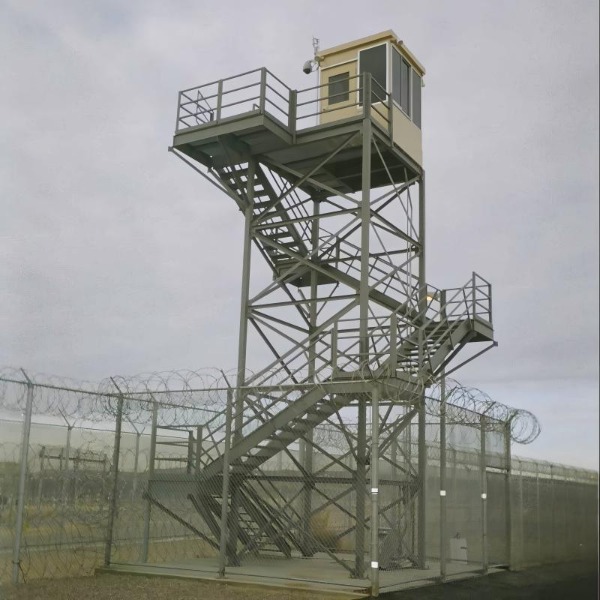
Observation towers are most effective as part of a layered security approach that combines elevated observation with ground-level response.
Layer 2: Perimeter Protection (Ground)
Fencing, access control systems, motion sensors, and ground patrols secure the facility perimeter. Ground teams respond to alerts from tower observers and intercept intruders.
Layer 3: Technology Integration (Surveillance)
Cameras, thermal imagers, radar, and AI analytics provide persistent monitoring that augments human observation. Towers serve as command hubs where security teams coordinate response.
Together, manned towers and mobile camera trailers create a layered security strategy combining human intelligence with persistent, technology-driven monitoring. This approach ensures that:
· Threats are detected at the earliest possible stage
· Response is coordinated and decisive
· Blind spots are minimized
· Security personnel remain protected while performing their duties
Qingdao Altai Tower Co., Ltd. is a professional manufacturer of telecommunication towers, power towers, and tower accessories, with ISO and CE international certifications and 23 international patents. The company's observation guard towers are designed for 360-degree surveillance, allowing security personnel to see surrounding situations and protect facilities from weather and threats.
| Model | Height | Key Features | |
|---|---|---|---|
| AT-G06 | 15–25m | Hot-dip galvanized, 360° visibility, customizable | |
| AT-G15 | 25m | Panoramic observation, industrial/military applications | |
| Multi-Function | 30m | Security monitoring, observation, emergency response |
Production capacity: 2,000–3,000 metric tons per month
Galvanizing: In-house workshop with Italian equipment, strictly following ASTM A123
Lead time: 30 days after payment
Packaging: Sea-worthy packaging with galvanized strapping
Qingdao Altai Tower observation guard towers comply with:
ASTM A123: Hot-dip galvanizing specifications
AWS D1.1: Welding standards
ISO 898-1/-2: Bolt and nut mechanical properties
Design wind speed: Up to 250 km/h
A: Hot-dip galvanized towers per ASTM A123 deliver 30 to 50 years of maintenance-free service life, depending on environmental conditions. In a typical C3 (moderate) atmosphere, an 85μm coating can last well over 50 years.
A: Height depends on the facility's size and terrain. Typical ranges:
6–12m: Small industrial sites, warehouses, event security
15–25m: Power plants, substations, medium-size facilities
25–50m: Large ports, military installations, wide-area surveillance
A: Yes. Mobile trailer-mounted towers can be relocated in under 2 hours. Fixed towers are permanent installations; roof-mounted options require no ground footprint.
A: Modern towers integrate long-range PTZ cameras, thermal imaging systems, night-vision devices, radar perimeter sensors, AI-powered motion detection, communications equipment, and drone integration.
A: Yes. ASTM A123 hot-dip galvanized towers are designed for wind speeds up to 250 km/h and operating temperatures from -40°C to +55°C. Optional HVAC pre-wiring supports extreme climate operation.
A: Towers provide human judgment and immediate response capability that automated systems cannot match. Elevated personnel can identify threats earlier, track movement over long distances, direct ground teams, observe blind spots that cameras miss, and coordinate emergency response.
A: Minimal. Hot-dip galvanized coating requires no painting or regular recoating. Periodic visual inspection of coating integrity and structural connections is recommended. The sacrificial zinc coating provides cathodic protection even if scratched.
Critical infrastructure protection demands a security strategy that is visible, proactive, and layered. Observation towers provide the elevated vantage point that no ground-based camera or patrol can replicate—the ability to see beyond fences, detect threats early, and coordinate decisive response.
When deployed as part of a layered security system combining towers, ground patrols, and integrated surveillance technology, observation towers create a defense-in-depth that protects the assets society depends on most. Hot-dip galvanized per ASTM A123, these structures deliver decades of reliable service in the harshest environments—coastal ports, industrial power plants, and remote dam sites.
For facility owners and security professionals, the question is not whether to deploy observation towers, but how quickly they can be installed to close critical security gaps. In an era of evolving threats, the tower that provides height, visibility, and human judgment remains one of the most effective security investments available.
Ready to secure your critical infrastructure with custom observation towers? Contact Qingdao Altai Tower's engineering team today for site assessment, custom design, and a detailed security tower proposal.



 IPv6 network supported