

 français
 русский
 español
 العربية
Search
What Are You Looking For?
Search

A radar support tower is a specialized steel structure engineered to elevate and support radar equipment—including the rotating antenna, pedestal, and protective radome—at a height that provides unobstructed line-of-sight coverage. Unlike standard telecom towers that simply hold passive antennas, a radar support tower must provide an exceptionally rigid platform. Because radar systems rely on precisely timed electromagnetic waves to detect, track, and characterize objects, the supporting structure must minimize deflection, vibration, and sway. Even a fraction of a degree of structural movement can distort the radar beam, introducing phase errors and degrading data fidelity. Therefore, radar towers are defined by their stiffness, high natural frequency, and strict deflection limits.
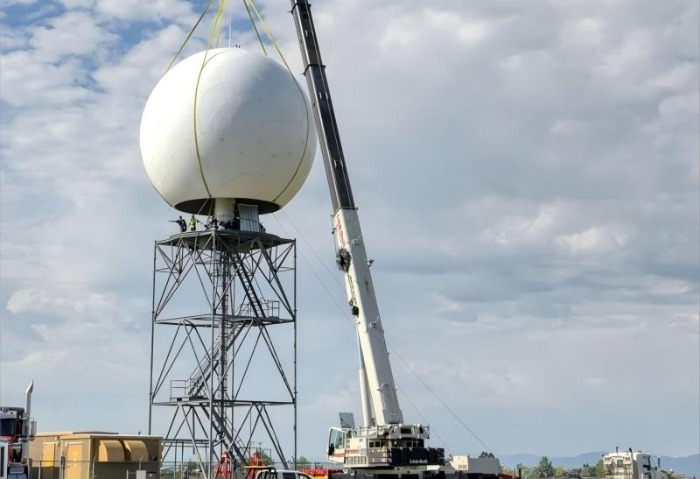
· Radar equipment is heavy and active: A typical radar assembly includes a heavy rotating pedestal (up to 10 tonnes), a large parabolic antenna, and a protective radome (weighing up to 4.2 tonnes).
· Data fidelity is the primary metric: A telecom tower prioritizes coverage area; a radar tower prioritizes pointing accuracy. The structure must not interfere with the electromagnetic signals.
· High stiffness is mandatory: To avoid resonant coupling with the rotating antenna, radar towers require a high natural frequency (typically ≥ 1 Hz to ≥ 3 Hz depending on the application).
· Deflection limits are strict: The tower must maintain strict angular deflection limits under wind and ice loads to prevent the radar beam from drifting off target.
· Platforms are structural diaphragms: Radar platforms must act as rigid horizontal diaphragms to distribute concentrated loads and contribute to the tower's overall torsional stiffness.
Who is searching for this information?
| User Type | Primary Intent | Key Concerns |
|---|---|---|
| Telecom/Radar System Integrators | Understand the structural prerequisites for deploying radar equipment | Tower stiffness, load capacity, integration with radar pedestals |
| Procurement Managers | Differentiate radar towers from standard telecom towers | Cost drivers, specialized manufacturing standards, lead times |
| Civil/Structural Engineers | Learn the dynamic requirements for precision sensing structures | Natural frequency targets, vibration damping, deflection limits |
| Government/Defense Planners | Specify infrastructure for air traffic control or weather monitoring | Compliance with TIA-222 and ICAO standards, site security |
Search intent summary: Users want a clear definition of what a radar support tower is and, more importantly, why it cannot simply be replaced by a standard telecom tower. They are looking for the engineering reasons behind the specialized design.
What exactly does a radar support tower hold? What are the components of the radar system?
Why can't I just put a radar on a normal telecom monopole?
What are the specific structural requirements for a radar tower?
How does vibration affect radar performance? What is "resonant coupling"?
What natural frequency does a radar tower need to achieve?
What is the role of the radome, and how does it affect the tower?
What standards govern radar tower design?
How do maintenance platforms on a radar tower differ from those on a telecom tower?
What it is, the equipment it carries, and its primary function.
Breaking down the rotating pedestal, parabolic antenna, radome, and the steel lattice/monopole structure.
The physics of radar and why structural vibration, deflection, and low natural frequency degrade data quality.
Natural frequency targets, deflection limits, and dynamic load analysis.
A concise comparison of design priorities.
Real-world engineering parameters and manufacturing capabilities.
Common questions and answers.
A radar support tower is the critical link between the ground and the sensitive electromagnetic equipment that monitors our skies, weather, and borders. It consists of two distinct but interdependent systems:
The Radar Equipment: The active system that transmits and receives signals.
The Supporting Steel Structure: The passive infrastructure that holds the equipment in place with extreme precision.
The steel structure typically takes the form of a heavy-duty lattice tower (for heights over 30 meters and heavy payloads) or a stiffened monopole (for shorter heights or space-constrained sites). Regardless of the configuration, the tower's primary job is to keep the radar antenna pointed exactly where it is supposed to be, regardless of wind, ice, or the movement of the antenna itself.
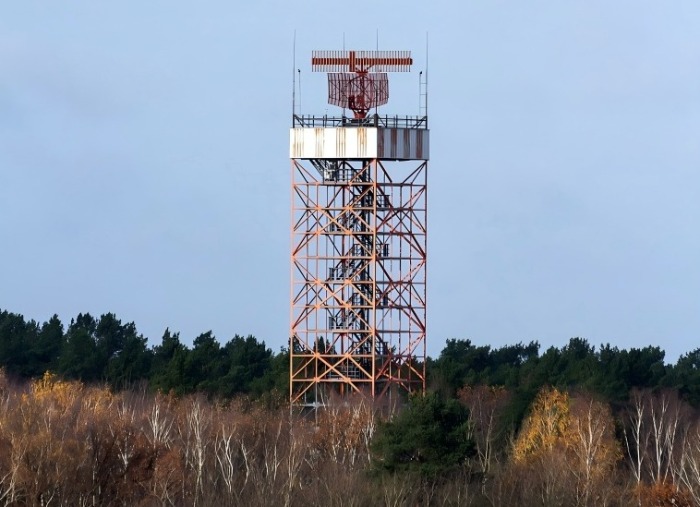
To understand why the structure is so specialized, one must understand the equipment it carries.
· The Pedestal (Rotating Base): This is the mechanical heart of the radar. It can weigh upwards of 10,000 kg. It houses the motors and slip rings that rotate the antenna, often completing multiple revolutions per minute. This creates continuous dynamic loading on the tower.
· The Antenna (Parabolic Reflector): The dish that focuses the radio waves. It catches the wind like a sail and adds significant concentrated mass at the very top of the tower.
· The Radome: A weatherproof, RF-transparent dome (often 11 to 12 meters in diameter) that protects the antenna from wind, ice, and rain. A standard radome alone can weigh 3,500 kg to 4,200 kg and adds a massive surface area for wind loads.
· The Steel Structure: The tower, platform, and foundation. It must transfer the massive overturning moments generated by the wind load on the radome down to the earth.
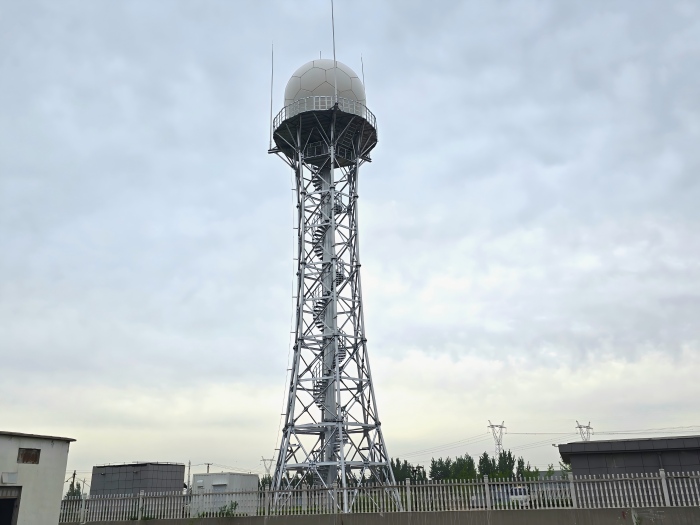
If you mount a radar on a standard telecom tower, the radar will likely fail to meet its performance specifications. Here is why:
1. The Stiffness Imperative (Vibration)
Every structure has a natural frequency—the rate at which it naturally wants to sway or vibrate. If the radar antenna rotates at a frequency that matches the tower's natural frequency, resonance occurs. The tower will begin to sway uncontrollably, amplifying the movement.
Even without resonance, a flexible tower introduces phase errors. The radar transmits a wave and expects the echo to return to a specific point. If the tower is vibrating, the antenna moves between transmission and reception, distorting the image.
2. Strict Deflection Limits
As wind hits the radome, the tower leans. While a telecom tower might tolerate a few degrees of deflection at the top, a radar tower cannot. A deflection of just 0.075 degrees can introduce unacceptable pointing errors. The tower must be exceptionally rigid (high natural frequency) to maintain line-of-sight accuracy.
3. Dynamic Loads
A telecom tower carries static, passive antennas. A radar tower carries a massive rotating machine. The cyclic loading from the pedestal rotation requires the steel structure to be analyzed for fatigue and dynamic amplification.
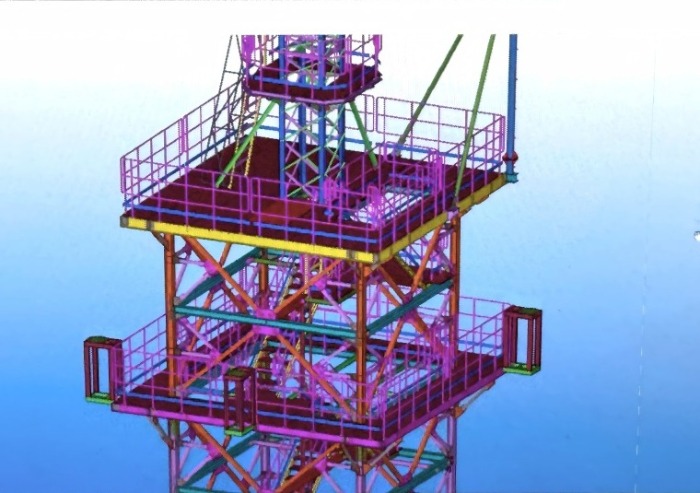
To meet these demands, radar support towers are engineered with specific criteria:
· High Natural Frequency: The tower must have a natural frequency that is safely separated from the antenna's rotational frequency and its harmonics. Industry standards often require a natural frequency of ≥ 1 Hz (for weather radar) or ≥ 3 Hz (for precision ATC radar).
· Stiffened Platforms: Radar platforms must be designed as rigid diaphragms. They are heavily cross-braced to prevent localized flexing and to distribute the massive concentrated load of the radar pedestal into the main tower legs.
· Advanced Foundation Design: The enormous overturning moment generated by the wind load on the radome requires massive foundations. A typical radar tower might require deep pile foundations (e.g., 24 piles, 1.2m diameter, 28m deep) to resist tipping.
· Maintenance Access: Access ladders and safety cables must be integrated into the structural design without introducing localized flexibility that could lower the tower's natural frequency.
| Design Parameter | Telecom Tower | Radar Support Tower |
|---|---|---|
| Primary Goal | Signal Coverage | Data Fidelity (Pointing Accuracy) |
| Equipment Type | Passive Antennas | Active Rotating Pedestal + Heavy Radome |
| Equipment Weight | 1,000 – 2,000 kg (distributed) | 10,000 – 15,000+ kg (concentrated) |
| Dynamic Loads | Negligible | High (Continuous rotation) |
| Natural Frequency | Not a primary constraint | Mandatory high frequency (≥ 1 Hz) |
| Platform Design | Antenna mounting ring | Rigid structural diaphragm |
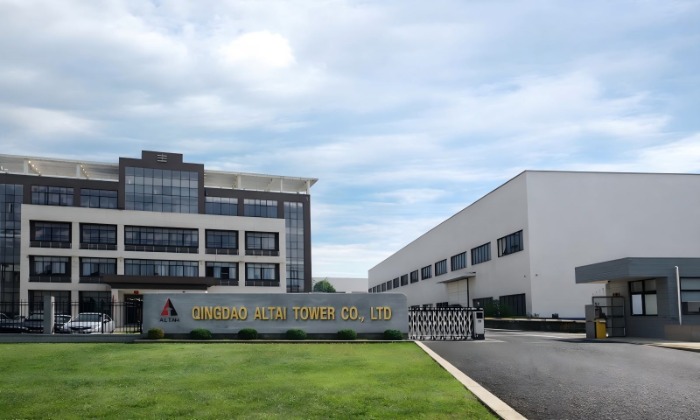
Qingdao Altai Tower Co., Ltd. is a professional manufacturer of telecommunication towers, power towers, and specialized radar support structures, established in 2003. The company’s engineering team designs radar towers that strictly adhere to the dynamic requirements of the radar equipment they support.
Engineering and Manufacturing Capabilities:
· Design Standards: ANSI/TIA-222-H/F/G, GB 50135, and customized dynamic analysis.
· Production Capacity: 3,000 metric tons per month, ensuring rapid delivery for large infrastructure projects.
· Fabrication Precision: CNC punching and drilling ensure ±0.5mm tolerance on bolt holes, crucial for the precise assembly of stiffened radar platforms.
· Galvanizing: In-house hot-dip galvanizing per ASTM A123 ensures a 30+ year lifespan in harsh, exposed environments.
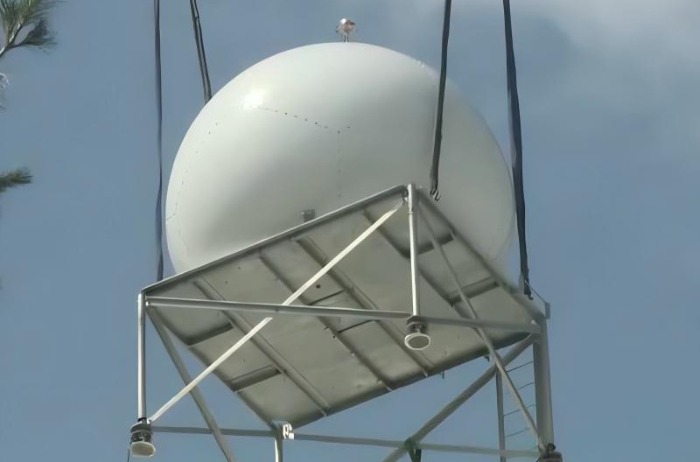
Application Example: 30-Meter Radar Support Tower
Altai Tower recently manufactured a 30-meter radar support tower for pest migration monitoring. The design addressed the specialized requirements of the radar system:
· High-Stiffness Lattice Configuration: The lattice geometry was optimized to achieve the required natural frequency, ensuring the rotating radar antenna maintained precise pointing accuracy.
· Diaphragm Platforms: The radar mounting platform was heavily cross-braced and integrated into the main leg structure to handle the concentrated weight and torque of the radar pedestal.
· Integrated Safety Access: A vertical fall-arrest cable system was installed along the ladder to ensure safe maintenance access without compromising the structural stiffness.
A radar support tower is more than just a steel structure; it is a highly engineered dynamic platform. By combining the heavy, active machinery of the radar equipment with an exceptionally stiff and precisely fabricated steel support structure, these towers ensure that the complex electronic eyes of our modern world can operate with absolute clarity. Choosing a manufacturer with proven expertise in dynamic structural analysis and precision fabrication is essential to the success of any radar deployment.
Ready to deploy a radar tower that meets strict structural and dynamic requirements? Contact Altai Tower’s engineering team today for custom design, dynamic analysis, and a detailed proposal.



 IPv6 network supported