

 français
 русский
 español
 العربية
Search
What Are You Looking For?
Search

When a typhoon knocks out cell towers, when floodwaters isolate a village, or when an earthquake shatters conventional infrastructure, every minute without communication costs lives. First responders need more than a backup generator — they need a complete, self-contained command post that rises to the occasion, literally.
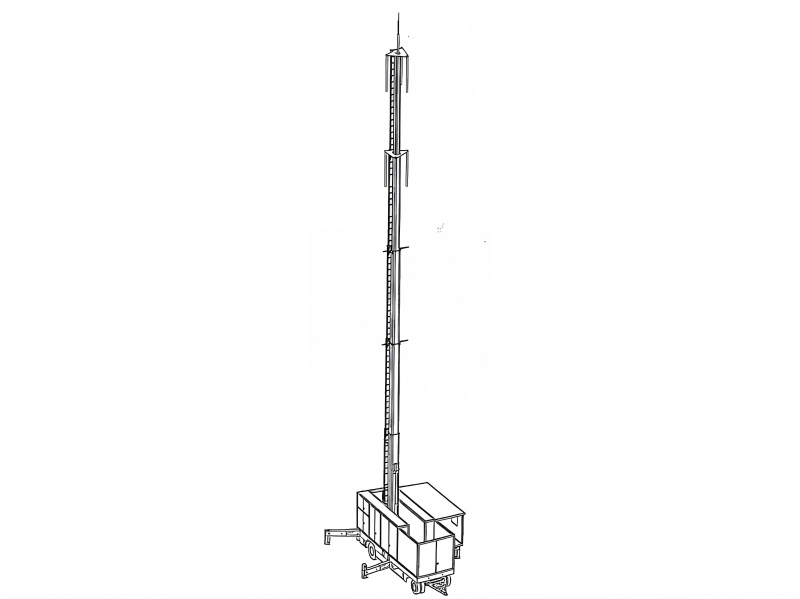
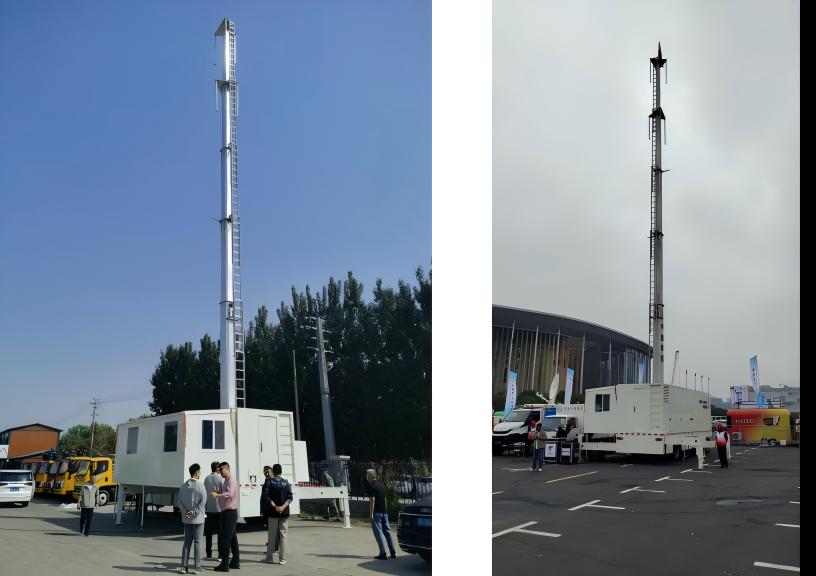
Enter the Integrated Super-Lifting Communication Base Station, unveiled at MWC 2025 Shanghai. This isn’t just another mobile tower. It’s a rapid-deployment, all-in-one emergency communications hub that transforms disaster zones from silent to connected in record time.
From Compact Transport to Full Operation in Minutes
Stowed for travel, the unit measures just 7.9m (L) × 2.3m (W) × 3.4m (H) — compact enough to fit on a standard flatbed truck. But once on site, it deploys with hydraulic power and wireless control. The tower extends to a working height of 25 or 30 meters, depending on the configuration, and its base expands to a stable 7.9m × 6.5m footprint.
The lifting speed of 0.25 m/s means the mast reaches full height in about two minutes. That’s the difference between waiting hours for a traditional crane-assisted tower and having a operational antenna array before the next weather window closes.
Built for the Toughest Conditions
The tower features five telescopic sections and can support up to six antennas arranged in two layers, each with a frontal area no larger than 0.6 m². One or two levels of wind-resistant guy cables ensure stability in severe weather — critical when emergency teams need to operate through a storm.
But the real innovation lies in what’s attached to the tower and what’s waiting at ground level.
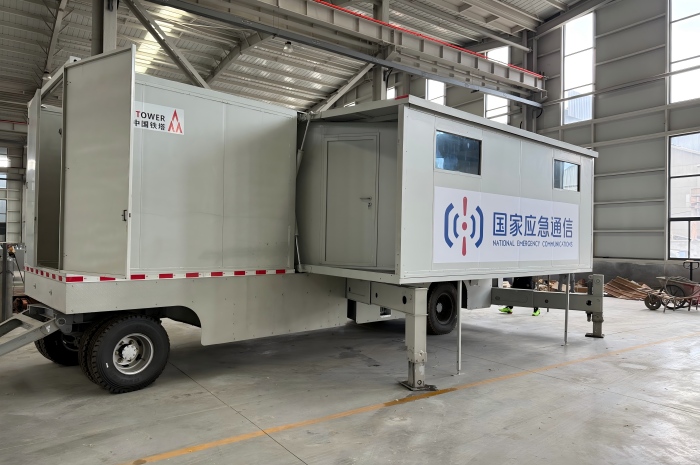
A Complete Emergency Operations Center
This isn’t just a pole with antennas. The base station integrates:
· A hydraulic power cabin with fully automated wireless operation (remote control) — operators can raise, lower, and manage the tower from a safe distance.
· Redundant power systems: High-frequency switching power supply, UPS (uninterruptible power supply), a lithium iron phosphate battery bank, and a 10kW diesel generator as emergency backup. Solar charging input is also available for sustainable field operation.
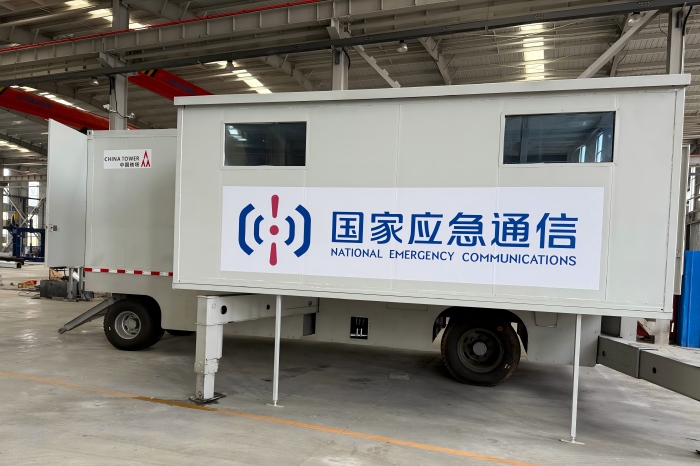
· An emergency command room (5.2m × 2.4m) equipped with a conference table, display screens, and air conditioning — a proper mobile HQ for incident commanders.
· An emergency supply storage area that can hold kayaks, water pumps, sandbags, and other disaster-response gear.
· A drone landing pad (2.2m × 1.2m) with charging ports, allowing aerial reconnaissance or delivery drones to recharge on site.
· Charging ports for phones, laptops, and field devices — a small but vital feature for evacuees and rescue teams alike.
· A public information LCD screen for broadcasting emergency alerts, safety instructions, or community updates.
More Than Cellular: A Platform for Smart Monitoring
The tower mast itself is designed to host far more than just telecom antennas. It can carry:
· Wireless backhaul equipment
· Weather monitoring sensors
· Surveillance cameras
· Emergency LED lighting
With an integrated FSU (Field Supervision Unit) for power and environmental monitoring, the entire station can be remotely supervised — battery status, generator health, tower tilt, wind speed, and more.
Proven Leadership, Global Attention
At MWC 2025, the mobile super base station received a rare honor: the Vice Mayor of Shanghai, officials from the Ministry of Industry and Information Technology (MIIT), and the Chairman of China Tower all attended its unveiling. International exhibitors and industry experts recognized it as a breakthrough for emergency communications and 5G resilience.
Why This Matters for Disaster Response
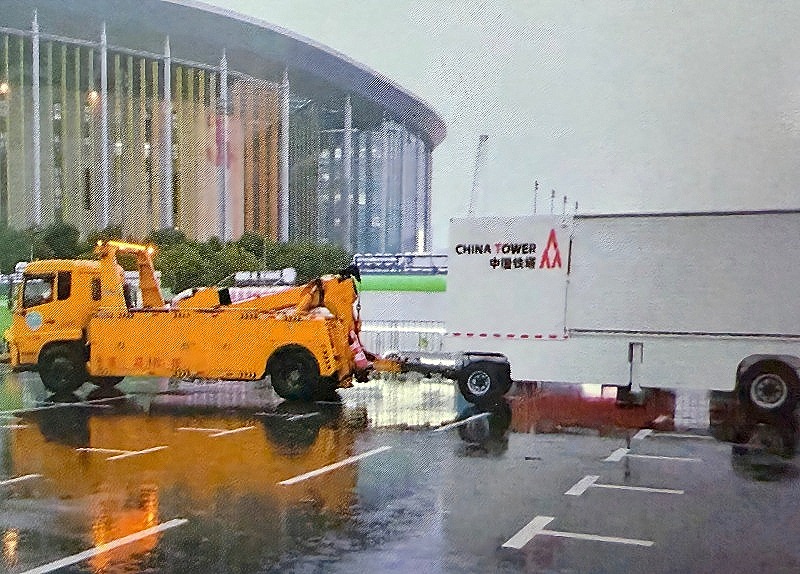
Traditional emergency communications often rely on satellite phones, portable repeaters, or COWs (cells on wheels) that require separate power trailers, separate command tents, and separate antenna masts. The Integrated Super-Lifting Base Station collapses all of those into one vehicle-transportable unit.
When a hurricane hits a coastal community, when a wildfire destroys a rural cell site, or when a flood cuts off a county seat, this tower can be rolling within hours. Once on site, one person using a wireless remote can raise it to 30 meters, connect the antennas, power up the command room, deploy the drone, and start broadcasting public alerts — all without waiting for a construction crew or a utility line connection.
The Bottom Line
From 3.4 meters stowed to 30 meters deployed in seconds — backed by redundant power, a full command center, drone support, and real-time remote monitoring — this mobile super base station isn’t just an incremental improvement. It’s a paradigm shift for disaster response.
In the next major emergency, silence won’t last long. The tower will rise, the signal will flow, and help will know exactly where to go.
Want to learn more about deployable emergency communication systems? Subscribe to our blog for the latest innovations in resilient infrastructure.



 IPv6 network supported