

 français
 русский
 español
 العربية
Search
What Are You Looking For?
Search

For self-supporting telecommunication towers, the corrosion protection system is not merely a finishing step—it is a fundamental determinant of structural longevity and lifecycle cost. Among the available protection methods, hot-dip galvanizing (HDG) stands as the industry gold standard, offering decades of maintenance-free service through a metallurgically bonded zinc-iron alloy coating. However, the economic and quality characteristics of galvanizing are profoundly influenced by how the steel is processed.

The choice between batch galvanizing—processing large volumes of components from multiple towers in a single production run—and single-piece processing—galvanizing oversized tower sections individually in a smaller kettle—involves a complex trade-off between unit cost, coating uniformity, and distortion control. For tower fabricators and network operators, understanding these trade-offs is essential for making cost-effective, technically sound procurement decisions.
Batch galvanizing, also known as general or after-fabrication galvanizing, involves processing multiple steel components together in a single kettle load. Components from several towers—leg sections, bracing members, gusset plates, and platforms—are racked, cleaned, fluxed, and dipped simultaneously in a large molten zinc bath. This is the dominant processing model for the vast majority of tower components, which are typically sized to fit within standard kettle dimensions.
The strategic shift to bulk galvanizing—the coordinated processing of components from multiple towers in a single, large-scale production run—unlocks profound scale economies. This approach is not merely a procurement tactic; it is a sophisticated exercise in production planning, logistics synchronization, and total cost management that fundamentally lowers the cost per ton of protected steel.
Self-supporting towers frequently incorporate large structural sections that exceed the dimensions of a standard galvanizing kettle—monopole base sections, large-diameter tubular legs, or complete tower segments intended for rapid field assembly. For these oversized components, batch processing is geometrically impossible. The alternative is single-piece processing: immersing each large section individually in a kettle sized to accommodate it, often requiring specialized handling, extended dipping cycles, and customized fixturing.
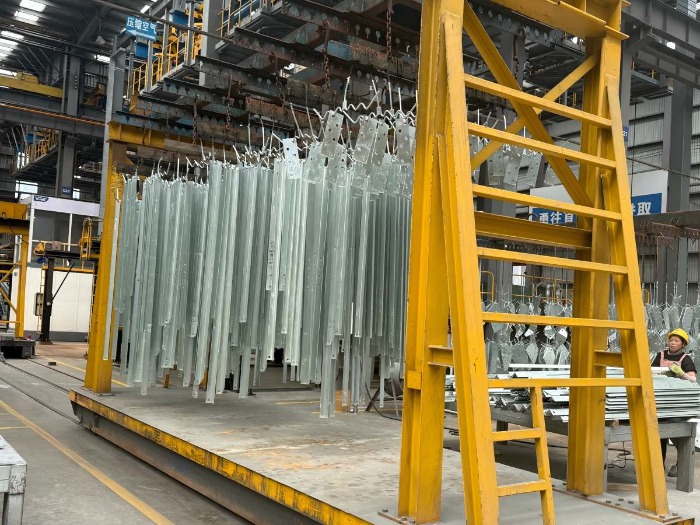
The economic advantage of batch galvanizing derives from the structure of galvanizing costs. The price of HDG is rarely a simple linear function of weight. Key cost components include:
· Kettle (Bath) Charge: A significant fixed or minimum charge to cover the energy and operational cost of heating and maintaining the zinc bath, regardless of load size.
· Handling and Fixturing: Labor for racking, wiring, and jigging components for immersion. Complex, small batches require proportionally more handling time per ton.
· Zinc Consumption: The actual cost of zinc metal, consumed based on the surface area of the steel.
· Post-Processing: Costs for quenching, inspection, and potential minor finishing.
The critical insight is that the kettle charge and handling costs are largely fixed or semi-fixed. Spreading these over a larger tonnage dramatically reduces their contribution to the unit cost. A large batch of identical components can be processed much more efficiently than a single, one-off custom piece; galvanizers can optimize the kettle load and process flow for high-volume orders, allowing them to offer a significantly reduced rate per unit weight.
Illustrative Impact: The fixed kettle charge that might make a 5-ton batch prohibitively expensive on a per-ton basis becomes negligible when divided across a 50-ton or 100-ton load. Volume-based zinc pricing further amplifies the advantage: large, predictable zinc consumption allows fabricators or their galvanizing partners to negotiate better terms for bulk zinc metal purchases.
Typical batch galvanizing costs for structural steel in China range from 800 to 1,200 CNY per ton, with zinc consumption accounting for approximately 50% of the total, energy for 30%, labor for 10%, and environmental compliance for 10%. For large-volume structural steel orders, rates in international markets can fall between $0.50 and $1.00 per pound.
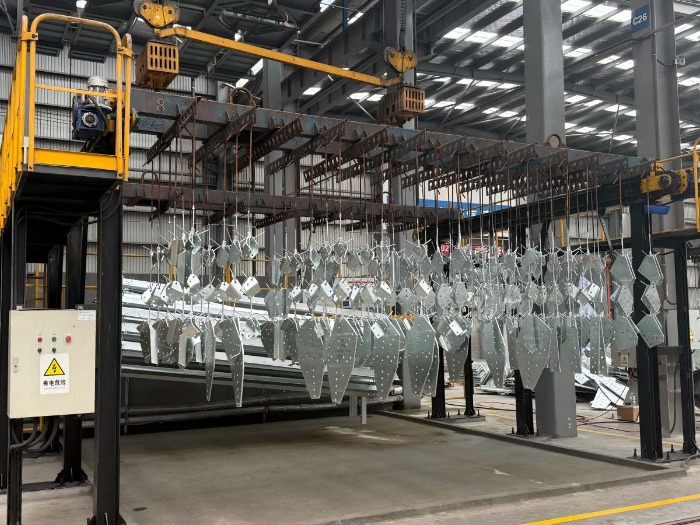
Single-piece processing inverts this cost structure. The kettle must be heated and maintained for a single item, regardless of whether that item occupies 10% or 100% of the kettle's capacity. The handling is specialized: large sections require custom rigging, careful positioning, and extended dipping times to ensure complete coverage and proper drainage.
Every galvanizing facility operates around a fixed kettle size; any piece requiring multiple dips due to its length or unusual dimensions will incur a premium due to the added labor and specialized handling time. Complex fabrications with hollow sections or overlapping surfaces increase the risk of trapped acids or air pockets, demanding extra time for safe immersion and drainage, which translates into higher labor costs.
The result: Smaller, custom jobs or complex fabrications typically fall into a higher pricing tier, with rates ranging from $1.00 to $2.00 per pound—double the rate of high-volume structural steel orders. For a large monopole base section weighing several tons, this premium can translate into tens of thousands of dollars in additional galvanizing cost.
Quality Trade-offs: Coating Uniformity and Consistency
Batch galvanizing is often characterized by greater variability in coating thickness and quality, particularly with irregularly shaped items. The reasons are procedural:
· Racking Density: Components must be suspended in the kettle with sufficient spacing to allow molten zinc to flow freely around all surfaces. Overcrowding can create shadow areas where zinc flow is restricted, resulting in thin or uncoated spots.
· Drainage: Complex assemblies with overlapping surfaces or closed sections require careful orientation to ensure complete drainage of molten zinc upon withdrawal. Poor drainage leads to heavy zinc deposits or icicles that must be removed post-processing.
· Batch Composition: Mixing components of different steel chemistries in a single batch can affect coating formation, as reactive steels (high silicon content) accelerate the zinc-iron reaction, producing thicker coatings that consume more zinc.
ASTM A123/A123M, the governing standard for hot-dip galvanized coatings on iron and steel products, requires the finish to be continuous, smooth, and uniform, free from uncoated areas, blisters, flux deposits, and gross dross inclusions. The standard also requires the coating to have strong adherence throughout the service life of the galvanized steel.
Achieving these requirements in a batch process demands careful engineering of racking patterns, process parameters, and quality control. However, the variability inherent in batch processing means that inconsistent coating thickness and quality remains a recognized disadvantage of the method.
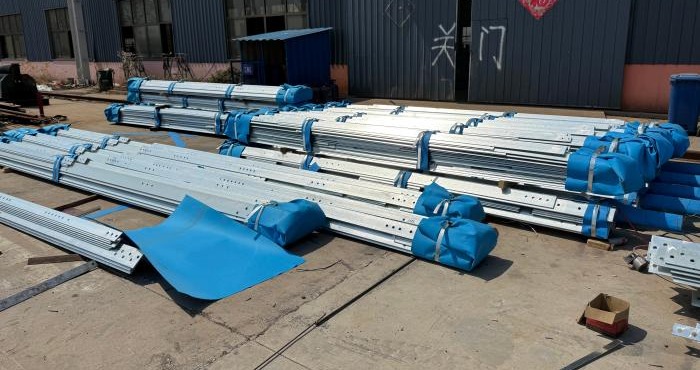
Single-piece processing offers several quality advantages for oversized components:
· Unobstructed Zinc Flow: With only one item in the kettle, there is no risk of shadowing from adjacent components. Molten zinc can flow freely around all surfaces, promoting uniform coating formation.
· Optimized Orientation: The single item can be positioned and oriented specifically to ensure complete coverage and proper drainage, without compromising the processing of other components.
· Controlled Chemistry: Processing a single item allows the galvanizer to adjust bath chemistry and process parameters specifically for that steel grade, optimizing coating formation.
However, single-piece processing is not immune to quality issues. Large sections require careful control of immersion and withdrawal rates to prevent uneven coating or excessive dross entrapment. The thermal mass of a large section can also affect bath temperature stability, potentially impacting coating quality.
Both batch and single-piece galvanizing introduce thermal stresses that can cause distortion in fabricated steel assemblies. The immersion of cold steel into a 450°C molten zinc bath, by controlled withdrawal and cooling, subjects the structure to significant thermal gradients.
In batch galvanizing, distortion risk is managed primarily through:
· Design for Galvanizing: Holes for venting and drainage must be incorporated into the design to prevent trapped air or chemical residues that can cause localized heating or cooling.
· Controlled Cooling: Components are typically air-cooled or quenched in a controlled manner to minimize differential contraction.
· Symmetrical Racking: Components are suspended to promote uniform heating and cooling, reducing the thermal gradients that drive distortion.
For large, single-piece sections, distortion risk is magnified. The thermal mass of a large monopole base or heavy leg section means that temperature gradients during immersion and cooling can be more pronounced. The massive section size also means that any distortion that occurs is more difficult and expensive to correct.
The design and fabrication of components intended for single-piece galvanizing must pay particular attention to:
· Section Symmetry: Asymmetric sections are more prone to distortion under thermal loading.
· Weld Sequence: The order and placement of welds can influence how the assembly responds to thermal cycling during galvanizing.
· Post-Galvanizing Straightening: For large sections that do distort, mechanical straightening may be required, adding cost and potentially affecting coating integrity.
The choice between batch and single-piece processing is not binary. For most tower projects, the optimal approach is a hybrid strategy:
All standard tower components—bracing members, gusset plates, platforms, ladders, and cable supports—should be processed in bulk batches. These components are typically sized to fit standard kettle dimensions, and their high volume makes them ideal candidates for the scale economies of batch processing.
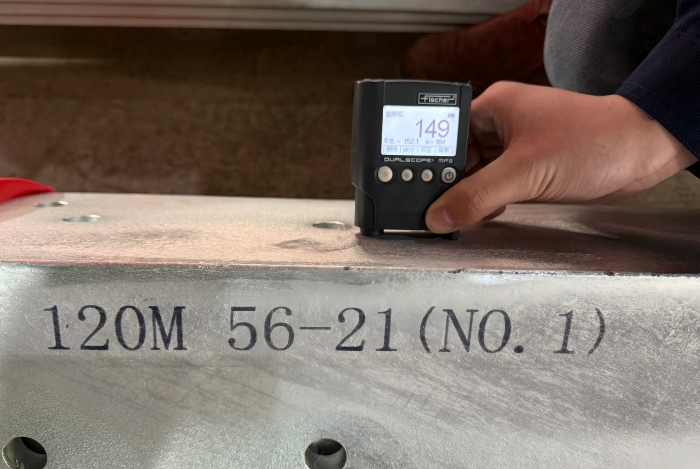
Large monopole sections, heavy base columns, and complete tower segments that exceed standard kettle dimensions require single-piece processing. For these components, the cost premium is unavoidable, but the quality advantages—unobstructed zinc flow, optimized orientation, and controlled chemistry—justify the additional expense.
| Factor | Batch Galvanizing | Single-Piece Processing |
|---|---|---|
| Unit Cost | Low (scale economies) | High (specialized handling) |
| Coating Uniformity | Variable (racking-dependent) | High (unobstructed flow) |
| Distortion Risk | Manageable (design-dependent) | Higher (thermal mass) |
| Minimum Lot Charge | Amortized across large volume | Applied to single item |
| Suitability | Standard components | Oversized sections |
| Production Planning | Requires coordination across multiple towers | Flexible, per-item scheduling |
Batch galvanizing and single-piece processing are not competing technologies but complementary approaches, each suited to different segments of the tower fabrication workflow. Batch galvanizing—particularly bulk processing across multiple towers—delivers the scale economies that make hot-dip galvanizing cost-effective for the vast majority of tower components. Single-piece processing, while more expensive per unit, provides the quality assurance and handling capability required for the oversized sections that define self-supporting tower design.
For tower fabricators and network operators, the optimal strategy is clear: process standard components in bulk batches to capture scale economies, and reserve single-piece processing for the large sections that cannot be accommodated in a standard kettle. By understanding the cost and quality trade-offs of each approach, procurement teams can make informed decisions that balance immediate galvanizing costs against long-term corrosion protection performance.
Ready to optimize your tower galvanizing strategy for cost and quality? Contact our engineering team today for a custom processing plan and detailed cost analysis.



 IPv6 network supported