
 français
 русский
 español
 العربية
Search
What Are You Looking For?
Search

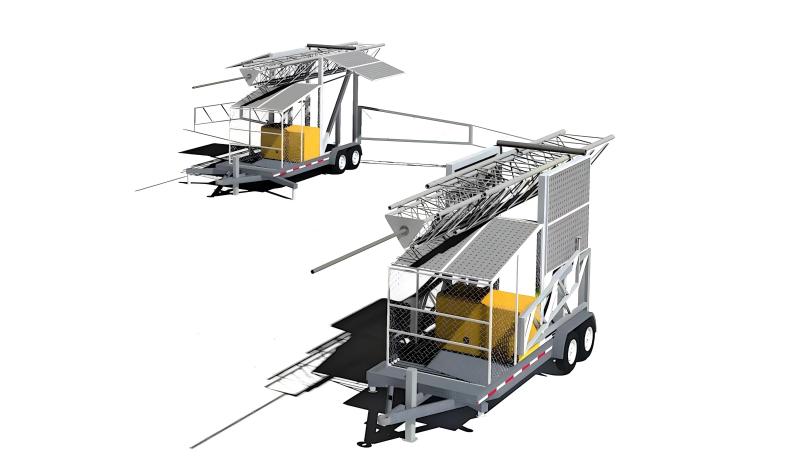
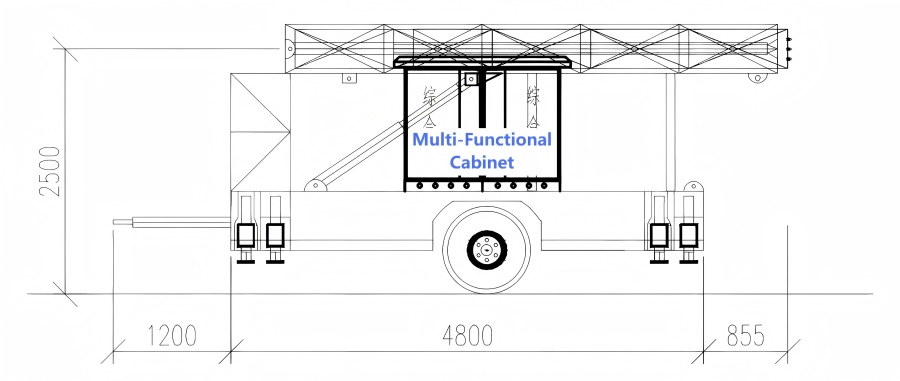
In the world of telecommunications, the Cell on Wheels (COW) is the ultimate rapid-response asset. Its value is defined by its ability to be deployed anywhere, anytime. While focus often rests on the tower, antennas, and shelter, the true enabler of this mobility—and a major determinant of its total cost—lies beneath: the trailer chassis and structural frame. A poorly optimized chassis is a persistent financial drain, burdened by excessive weight, high fuel costs, complex maintenance, and restrictive road regulations. Conversely, a chassis engineered for cost-efficient mobility through intelligent design, material science, and fabrication precision transforms the COW from a heavy liability into a lean, agile, and economically superior asset.
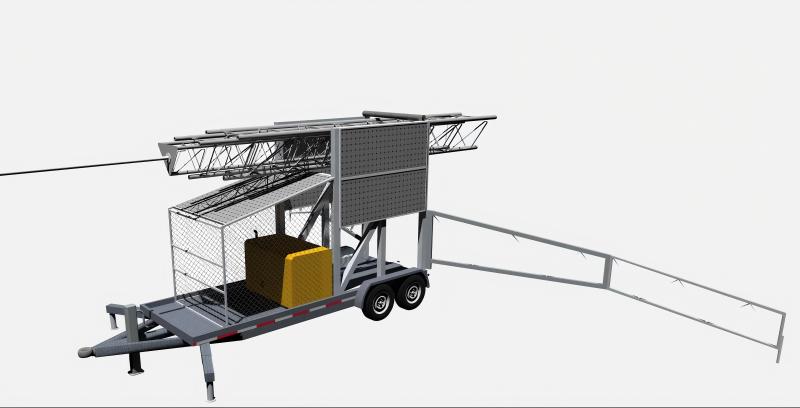
The chassis design must solve a fundamental trilemma: it must be strong enough to handle dynamic road loads and the static weight of the erected tower; light enough to maximize payload capacity and minimize towing costs; and cost-effective to fabricate and maintain. Traditional over-engineering for strength leads to weight and cost penalties, while under-engineering risks failure and downtime. The solution is not more steel, but smarter steel and smarter design.
The primary frame, or "substructure," that integrates with the trailer and supports the shelter and tower base is the first target for optimization.
· Topology Optimization & FEA-Driven Design: Modern design begins not with a standard I-beam but with a digital design space. Using Finite Element Analysis (FEA), engineers simulate the forces encountered during transport (bending, torsion) and operation (static load, wind shear). Topology optimization software then generates a material layout that uses the minimum amount of material precisely where stress paths demand it, often resulting in organic-looking, lightweight truss or optimized web structures rather than solid beams. This removes superfluous material that adds cost and weight but no strength.
· Integrated Functional Mounting: The design should incorporate welded-on mounting pads, brackets, and reinforcement plates for generators, fuel tanks, battery boxes, and the tower base during initial fabrication. This is far more robust and cost-effective than field-welding or bolting these components to a generic frame later, which can compromise corrosion protection and localize stress.
The choice of steel is paramount. Replacing conventional mild steel (e.g., A36/SS400) with High-Strength Low-Alloy (HSLA) steels (e.g., ASTM A572 Grade 50 or equivalent Q345B/C) is a game-changer.
The Strength-to-Weight Advantage: HSLA steels offer a significantly higher yield strength (345-550 MPa vs. 250 MPa). This allows engineers to down-gauge—using thinner plate and smaller beam sections to achieve the same structural performance. A component made from 8mm HSS can often replace one made from 10mm mild steel, achieving a 15-25% weight reduction in the frame without sacrificing safety margins.
Lifecycle Cost Impact: The reduced weight has a cascading effect:
- Increased Payload: More weight budget is available for the core mission equipment (shelter, tower, generators).
- Reduced Towing Costs: A lighter trailer requires a smaller, more fuel-efficient tow vehicle (F-550 vs. F-750, for example), lowering fuel consumption and vehicle leasing/ownership costs.
- Improved Regulatory Compliance: Staying under critical weight thresholds (e.g., 12,000 lbs or 26,000 lbs in the US) avoids the need for a Commercial Driver's License (CDL), simplifies logistics, and reduces insurance costs.
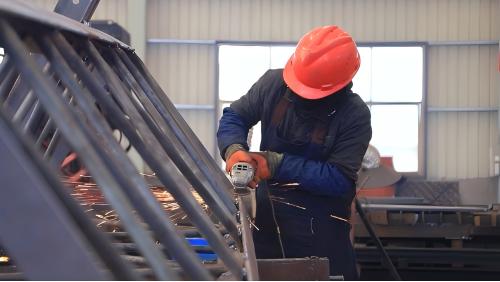
Optimized design and materials can be undone by poor fabrication. Precision manufacturing is essential.
· CNC Cutting & Drilling: All structural members should be cut and have attachment holes drilled via Computer Numerical Control (CNC). This ensures perfect fit-up, eliminates the need for field modification ("burning and grinding"), and allows for the use of high-strength bolted connections. Bolted connections, designed with precision, are often faster to assemble and allow for easier future disassembly or modification than field welds.
· Corrosion Protection Strategy: The chassis is constantly exposed to road spray, salt, and weather. Hot-dip galvanizing (HDG) after fabrication is the gold standard, providing decades of protection. The design must facilitate this: avoid enclosed volumes that trap galvanizing bath chemicals, provide adequate drain and vent holes, and ensure all surfaces are accessible for coating.
Reinventing the wheel is costly. The chassis should be designed to integrate seamlessly with high-quality, standardized, off-the-shelf running gear.
- Suspension & Axles: Specifying proven, mass-produced torsion axles, leaf springs, or air ride systems from reputable suppliers ensures reliability, availability of spare parts, and predictable performance. Custom, one-off suspension designs are maintenance nightmares.
- Braking Systems: Compliance with road safety regulations is non-negotiable. Integrating standardized electric-over-hydraulic or air brake systems, complete with breakaway safety features, is essential. A design that simplifies the routing and protection of brake lines improves safety and serviceability.
- Lighting & Electrical Harnesses: Using pre-assembled, weather-sealed wiring harnesses and standard trailer light modules (LED) reduces installation time, improves reliability, and simplifies troubleshooting.
| Metric | Conventional "Off-the-Shelf" Trailer Chassis | Engineered & Optimized COW Chassis | Impact on TCO |
|---|---|---|---|
| Structural Weight | Heavy, based on generic over-engineering. | 15-25% lighter through HSS and topology optimization. | Lowers fuel costs, increases payload, eases towing. |
| Fabrication Method | Often relies on manual cutting and welding. | CNC-precise, high-strength bolted connections. | Reduces labor, improves quality/consistency, enables easier upgrades. |
| Corrosion Protection | Paint or partial coating; prone to rust. | Full hot-dip galvanizing (HDG) as part of the design. | Eliminates rust-related maintenance/repair, extends asset life by 20+ years. |
| Regulatory Compliance | May inadvertently exceed weight or length limits. | Designed from the outset for CDL-free operation where possible. | Reduces licensing costs, broadens the pool of eligible drivers. |
| Serviceability & Upkeep | Custom parts, difficult to access components. | Standardized running gear, accessible maintenance points. | Lowers maintenance costs and downtime. |
The mobility of a COW is its superpower. By investing in an optimized chassis and structural frame—through FEA-driven design, strategic use of high-strength steel, precision fabrication, and integration of standard running gear—operators unlock significant and recurring cost savings. This approach shifts the chassis from a commodity purchase to a strategic, value-engineered subsystem. It directly reduces operational expenses, enhances deployment flexibility, and ensures the asset remains road-ready and reliable for its entire service life. In the mission to provide connectivity anywhere, the journey begins with a smarter foundation on wheels.
Learn more at www.alttower.com



 IPv6 network supported